Style | StandardCards

OpenStreetMap Blogs

Tuesday, 09. December 2025

OpenStreetMap User's Diaries

Mid-day mapping and rabbitholes

I’m finding it difficult to pick a particular mapping task to focus on, because even in my corner of Orange, there seems to be so much to do. For example, I’ve noticed that the sidewalk ways sort of peter out a few blocks away from the Circle. I was glancing at some geometry last night, and also noticed that some people have tagged a few backyard swimming pools, but there are plenty of unmapped

I’m finding it difficult to pick a particular mapping task to focus on, because even in my corner of Orange, there seems to be so much to do. For example, I’ve noticed that the sidewalk ways sort of peter out a few blocks away from the Circle. I was glancing at some geometry last night, and also noticed that some people have tagged a few backyard swimming pools, but there are plenty of unmapped pools visible on imagery. I spent a little time adding some pools, as well as adding access=private tags the existing ones. It’s nice to have some stuff to do that doesn’t always involve going out somewhere (not that that would be feasible in people’s backyards anyway heh).

Then I noticed solar panels on aerial imagery, and wondered if anyone had tagged them. I know people tag larger power infrastructure, but mapping rooftop solar seems like it would be cool data to have, too, especially in Southern California, where it works particularly well. It’s also easy to do from imagery.

The neighborhood with the pools also has a decent amount of rooftop solar, so I mapped a few of those as well. I realized, though, after uploading a bunch (oops), that some of the panels aren’t necessarily photovoltaic cells; they could be rooftop water heating, especially smaller areas that look particularly black. I plan to go back through and try to verify if they really are rooftop solar. Most probably are, and most of them look distinctive or big enough that I’d be confident in tagging them as rooftop photovoltaic cells, but a few of them could also be rooftop water heating, so I might just remove the photovoltaic-specific tags from them for now. It’s still rooftop solar, but the particular energy use will just be ambiguous. I think that’s better than it being incorrect.

Focus!

I need to pick a few things to focus on and them see them through to completion, I think. I have a bad habit of starting projects and not finishing them. In no particular order, I’d like to map:

  • Fire hydrants (my OG quest)
  • Rooftop solar
  • Sidewalks
  • POIs (especially adding business hours for things)
  • Addresses for multi-family housing, although I’m not sure how OSM typically handles that, beyond interpolation.

The quixotic side of me would like to do this for the entire City of Orange, but that’s not feasible on my own. In the meantime, I’ll try to focus on a small area first and get that mapped as detailed as possible.

It would be nice to meet up with other mappers nearby, too. I’m not sure if OC has any mapper meetups, but I ought to check (and then maybe start one if it doesn’t!). If any OC OSM folks happen to stumble upon this, say hi!


J'ai créé mon salon sur BigBlueButton

J’ai créé mon salon sur BigBlueButton, le lien se trouve ici: @HugoC01

J’ai créé mon salon sur BigBlueButton, le lien se trouve ici: @HugoC01


Encounters Along My Mapping Walks

RETEX: Encounters Along My Mapping Walks

(translation by ChatGpt)

to be continued, maybe:

  • journal entry (upcoming): Existential Questions About My Encounter with Panoramax
  • journal entry (upcoming): Existential Questions About OSM and the Wikimedia World
  • journal entry (upcoming): My First Experiences With an RTK Rover and an

RETEX: Encounters Along My Mapping Walks

(translation by ChatGpt)

to be continued, maybe:

  • journal entry (upcoming): Existential Questions About My Encounter with Panoramax
  • journal entry (upcoming): Existential Questions About OSM and the Wikimedia World
  • journal entry (upcoming): My First Experiences With an RTK Rover and an RTK Base

My urban recycling trek is now complete (at least regarding the attempt to map all voluntary drop-off points in the GPS&O intercommunality). I still need to clear up some fixme tags. This journal entry isn’t about mapping information but simply about a few encounters I had during my walks. They are just brief flashes of emotion, smiles, or frustration.

To understand the atmosphere of these encounters, picture me as:

  • 70 years old, usually in shorts (except below 11°C)
  • with a backpack (20L)
  • always carrying at least one hiking pole in one hand and a camera in the other
  • sometimes with a pole sticking out of my backpack holding a GNSS antenna at head height

The Best of the Best: Hunting for AEDs

in a micro-crèche

2025-09-08 in Médan I’m looking for a micro-daycare facility to verify the presence of an AED (Osmose suggestion). I wander a bit around the assumed location at the end of a residential cul-de-sac and eventually identify the daycare. I hesitate to enter the garden and ring the doorbell when an educator opens a ground-floor window, leans out, and asks whether I’m looking for something and if she can help (a polite way of saying “we’re watching, please move along”).

We exchange a couple of rather friendly minutes during which I silently give up on asking whether I may come in to photograph the AED (didn’t seem very wise). Instead, I hand her my phone and ask if she can photograph the AED on their wall (at least we both know she will avoid putting any children in the frame).

A brief hesitation, a few back-and-forths between me (standing outside the window) and her supervisor… and she brings my phone back, with two photos of the AED and a big smile.

I think I brightened her day — she’s probably still talking about it…

in my train station

2025-09-08 in Villennes-sur-Seine I’m strolling along the platforms of my town’s train station searching for an outdoor AED that supposedly exists there. I don’t find it (found it fifteen days later on the other side of the station), stop by the exit in front of an outdoor wall sign reading “AED,” and grumble in my nonexistent beard: “What’s the point of putting up an AED sign if the device isn’t visible and accessible nearby? Pffff…”

A small voice behind me, from a 12- or 13-year-old leaning on his scooter:

  • sir, do you need a defibrillator?
  • Oh no, I just wanted to photograph it, everything is fine, thanks!
  • because if you need one, there’s one across the square, on the library wall, on the right

So I met a kid (friendly sense of the word) who knows what a defibrillator is, knows where one is nearby, wonders if an adult next to him might need one, and immediately directs him to the closest!

Bravo, and thank you (to the kid and to his educators, parents and/or teachers). I wouldn’t have bet a cent on this kind of reaction at that age, and I walked away with a breath of hope about young people’s attention to others.

in a hypermarket

survey 2025-10-02 Buchelay I’m looking for an indoor AED indicated by Osmose in a hypermarket gallery. Not finding it, I ask a security guard if he knows where it is, making sure to say that there’s no emergency. He knows. Without hesitation, he takes me to it, leaves me in front of it, and returns to his security job (I wouldn’t swear he didn’t keep a cautious eye on what I was doing with “his” AED).

I take photos and notice a blinking orange light (later confirmed at home to be a routine maintenance indicator due within two months). Unsure, I try to find the guard again, but he’s gone, so I alert one of his colleagues. Far less receptive. Polite nod. Promise of action…

I left only moderately confident that anything would be done.

in a church

survey 2025-09-30 Mantes-la-Ville Osmose indicates an indoor AED in a church. I’m not Catholic, and rather non-practicing in my own religion, but I decide to enter while respecting the customs and expectations of the place. No AED visibly apparent, and I assume it may be in the back areas inaccessible to regular visitors. I’m about to leave when a man in a chasuble comes out from those back rooms and sits on one of the sparsely filled benches. I gently ask whether I may photograph the AED supposedly in his church. Slightly surprised look, then: “of course, why not?” and he returns to his meditations.

I wait a bit, thinking he might guide me there, but he doesn’t move, and I eventually figure that I should just leave.

At the back of the church, as I prepare to exit, a worshipper seated on a bench who had clearly observed my little dance — without understanding it — smiles and invites me to sit on one of the many empty benches. I decline and explain my search. Big smile, he stands up and shows me the AED, perfectly visible right next to the entrance. I still don’t know — and probably neither the worshipper nor the man in the chasuble knows — how I managed not to see it.

Photos, big smiles, silent nods of respect, and I left with both photo and geolocation.

But What Are You Doing? — and Various Questions

about my photos of garbage containers

survey 2025-07-04 Carrières-sous-Poissy I’m photographing a household waste drop-off container. An older neighborhood resident carrying several bags approaches to dispose of her load. I step aside so she doesn’t think I’m photographing her, then realize she may have trouble pressing the foot pedal used to open the container. So I return and press it for her. She didn’t seem to expect it. She thanked me quite naturally, then started a small conversation to ask what I was doing (besides pressing pedals). Attempts at explanation. Her biggest confusion: “but who do you work for?

I definitely need to work on explaining the purpose and value of collaborative work for free and shared knowledge…

about my GNSS antenna

survey RTK 2025-10-10 Villennes My first mapping session with an RTK rover (quick outing at my town’s sports complex). I cross paths with three sports instructors on break, puzzled by the pole and antenna sticking out of my backpack. It does look a bit Martian (or at least alien — Mars not necessarily involved).

Short chat about OSM, its purpose, its free and collaborative nature. Small detour into RTK and its usefulness (beyond OSM).

I’m not sure my explanations about OSM or RTK left any lasting impression… but I tried. I wonder whether it would be useful to keep a few simple OSM flyers in my pockets for this kind of impromptu street-corner conversation.

And… I just checked the Wiki and found Category:Flyer, where I should be able to find something helpful (haven’t done it yet). Never underestimate the Wiki :)

Knowing When to Stop

Can I help you?

survey 2025-09-30 Magnanville The situation: slightly bent, leaning on my hiking pole, looking down at my smartphone to choose my next point to check/create… but standing at the edge of a pedestrian crossing with a red light on a busy avenue where pedestrians are rare.

Do you need help crossing?” (a woman my age, full of kindness, probably thinking my hiking pole was a white cane).

I declined with many thanks but promised myself not to stop right at the edge of pedestrian crossings anymore (also remembering there are always drivers who stop the instant they see someone near a crosswalk).

Knock Knock Knock

survey 2025-12-08 Villennes-sur-Seine Stopped on a very narrow, rarely used sidewalk at the end of a bridge over the highway, trying to reposition the GNSS antenna poking out of my backpack behind my neck. Soft taps on my backpack, without a word: a woman I was blocking who hadn’t dared call out (maybe the antenna was intimidating :) ).

and others…

Little Free Libraries

During my outings, I map the little free libraries I encounter. With photos on Panoramax (and sometimes on Wikimedia Commons).

I was pleasantly surprised (2025-10-03) to receive a thank-you message from someone who built a website dedicated to little free libraries sourced from OpenStreetMap (with proper credits). His site can be seen as a thematic rendering application for OSM data. He promotes the idea that OSM data is free, ideally long-lasting, and updated through field surveys.

Nice…

a driver–cleaning-agent altercation

survey 2025-09-11 Mantes I’m walking on the sidewalk, looking for my next container to map. On the opposite side of the street, a verbal altercation between an irritable driver and a street-cleaning worker. From what I can gather, the driver seemed annoyed by the worker’s presence and activity (safety vest, broom…).

There was no physical violence, but I’m not particularly brave. I simply stopped, planted firmly on my two hiking poles, and watched the scene, camera in hand.

The argument slowed down, a glance exchanged between the driver and me (or perhaps my camera)… and the grumbler sped off loudly.

A final glance between the cleaning worker and me, a small smile and nod of solidarity, and we each returned to our tasks.

Sometimes it doesn’t take much…

a street-artist

I also map street-art murals I pass by, especially because the intercommunality sponsors around forty of them, so they’re quite common. I photograph them and upload the photos to Panoramax. When I tried uploading them to Wikimedia Commons, I realized that the licenses don’t allow it under current French law (we’ll have to wait for the death of the — usually young — artists plus 70 years, by which time the murals (and I) will be gone. These constraints also apply to Panoramax, of course).

Out of curiosity, I emailed one of the mural artists about this issue. His reply (quoted verbatim):

Good evening, To be honest, I can’t really answer you. My position and my opinion are that once a mural is in the street, it spreads and has “its own life”. The only thing is to credit the artist and maybe date it (year of creation). That’s it. In any case, well done for your initiative. If you have a link, don’t hesitate. Have a good evening

This doesn’t change the impossibility of publishing the photos (unless one could certify/authenticate this response… which would likely be more trouble for the artist than painting the mural). There is progress to be made regarding public artworks…


These RETEX (feedback) journal entries reflect my beginner’s choices, hesitations, discoveries, and questions. These texts represent only my experience and are not Wiki entries. Some of these choices have been discussed on the France forum, but not all. I remain open to any comments and have no intention of giving recommendations here.


Brèves rencontres au cours de mes trekking urbains

RETEX : Rencontres au fil des randonnées cartographiques

à suivre peut-être :

  • entrée de journal (à venir) : Questions existentielles sur ma rencontre avec panoramax
  • entrée de journal (à venir) : Questions existentielles sur OSM et le monde Wikimédia
  • entrée de journal (à venir) : Mes premières expériences de rover RTK et de base RTK

    RETEX : Rencontres au fil des randonnées cartographiques

    à suivre peut-être :

    • entrée de journal (à venir) : Questions existentielles sur ma rencontre avec panoramax
    • entrée de journal (à venir) : Questions existentielles sur OSM et le monde Wikimédia
    • entrée de journal (à venir) : Mes premières expériences de rover RTK et de base RTK

    Mon trekking urbain recyclage est maintenant fini (en ce qui concerne la tentative de cartographie de tous les points d’apport volontaire de l’intercommunalité GPS&O.). Il me reste à régler certains fixme.
    Cette entrée de journal ne concerne pas des informations cartographiques mais simplement quelques rencontres que j’ai faites au cours de mes marches. Il s’agit juste de brefs éclats d’émotion, de sourire ou de colère.

    Pour comprendre l’ambiance de ces rencontres, il faut m’imaginer :

    • 70 ans, en short en général (sauf en dessous de 11 degrés Celsius)
    • avec un sac à dos (20l)
    • toujours au moins un bâton de marche dans une main et un appareil photo dans l’autre.
    • parfois une canne sortant du sac à dos et portant (à hauteur de ma tête) une antenne GNSS

    Le must : la recherche des DAE

    dans une microcrèche

    2025-09-08 à Médan
    Je cherche une micro-crèche pour vérifier l’existence d’un DAE (suggestion Osmose). Je tourne un peu autour du lieu supposé au bout d’une impasse résidentielle et finis par identifier la crèche. J’hésite à entrer dans le jardin et à sonner à la porte lorsqu’une animatrice ouvre une fenêtre (rez-de-chaussée), se penche à l’extérieur et me demande si je cherche quelque chose et si elle peut m’aider (façon de me dire “nous sommes vigilantes, passez votre chemin”).

    S’ensuivent deux minutes d’échanges plutôt cordiaux pour expliquer ce que je fais au cours desquels je renonce intérieurement à lui demander si je peux entrer pour photographier le DAE (cela ne m’a pas semblé très prudent). En revanche, je lui tends mon téléphone et lui demande si elle peut photographier le DAE sur son mur (au moins nous serons sûrs tous les deux qu’elle évitera de mettre des enfants dans le champ de l’appareil).

    Petite hésitation, quelques aller-retours entre moi (à l’extérieur à la fenêtre) et sa responsable … et elle me ramène mon appareil, avec deux photos du DAE et un grand sourire.

    Je pense que j’ai égayé sa journée et qu’elle en parle encore …

    dans ma gare

    2025-09-08 à Villennes sur seine
    Je déambule sur les quais de la gare de ma ville à la recherche d’un DAE outdoor supposé y être. Je ne le trouve pas (je l’ai trouvé quinze jours plus tard de l’autre côté de la gare), m’arrête à la sortie, devant un pannonceau mural extérieur ‘DAE’ et grommelle dans ma barbe (qui n’existe pas) “à quoi cela sert de mettre un pannonceau DAE si l’appareil n’est pas visible et accessible à proximité, Pffff …”

    Une petite voix derrière moi, provenant d’un jeune de 12 ou 13 ans, appuyé sur sa trottinette :

    • monsieur, vous avez besoin d’un défibrillateur ?
    • Oh non, c’était juste pour le photographier, tout va très bien, merci !
    • parceque, sinon, il y en un de l’autre côté de la place, sur le mur de la bibliothèque, à droite

    J’ai donc rencontré un môme (terme amical) de 12 ans qui sait ce qu’est un défibrillateur et où en trouver un à proximité, qui s’interroge sur le fait qu’un adulte à côté de lui en a peut-être besoin et l’oriente tout de suite vers le plus proche !

    Bravo, et merci (au jeune et à ses éducateurs, parents et/ou enseignants).
    Je n’aurais pas parié un centime sur ce genre de réaction à cet âge et suis reparti avec un soufle d’espoir sur l’attention des jeunes vers les autres.

    dans un hypermarché

    survey 2025-10-02 Buchelay
    Je cherche un DAE que Osmose indique dans la galerie intérieure d’un hypermarché. Ne le trouvant pas, je m’adresse à un vigile pour lui demander s’il sait où le trouver, en prenant bien la précaution de lui dire qu’il n’y a pas de besoin. Il sait. Sans hésiter, il m’y conduit, me laisse devant et s’en retourne à son job de vigile (je ne jurerais pas qu’il n’a pas gardé un oeil prudent sur ce que je faisais de son DAE).

    Je prends en photo et vois un voyant clignotant orange (après vérification à mon retour chez moi, je vois qu’il s’agit simplement d’un signal d’intervention à faire dans un délai de deux mois). Dans le doute, je recherche mon vigile, qui a disparu, et alerte un de ses collègues sur l’existence de ce voyant d’alerte et le probable besoin d’intervention. Là, réceptivité beaucoup plus faible. Acquiescement poli. Promesse d’action…

    Je suis reparti moyennement confiant dans la suite donnée à ma remarque.

    dans une église

    survey 2025-09-30 Mantes la Ville
    Osmose me signale un DAE indoor dans une église. Je ne suis pas catholique, et plutôt non pratiquant dans ma religion, mais je décide d’entrer en respectant au mieux les pratiques et attentes du lieu.
    Pas de DAE immédiatement visible et je pense qu’il est peut-être dans les arrières a priori inaccessibles aux fidèles. Je m’apprête à repartir lorsqu’un homme en chasuble sort de ces arrières et vient s’asseoir sur un des bancs clairsemés. Je me permets de l’interpeler doucement en lui demandant si je peux photographier le DAE sensé être dans son église. Petit regard surpris puis : “bien sûr, pourquoi pas ?” et il replonge dans ses méditations.
    J’attends un peu, pensant qu’il va m’y conduire, mais il ne bouge pas et je finis par me dire qu’il ne me reste en effet qu’à repartir.

    Au fond de l’église, alors que je m’apprête à rejoindre la porte, un fidèle assis sur un banc et ayant observé mon manège, visiblement sans le comprendre, me souris et m’invite à m’asseoir sur un des nombreux bancs vides.
    Je décline son invitation et lui explique ma recherche. Grand sourire et il se lève pour m’accompagner au DAE qui était parfaitement visible à côté de l’entrée. Je ne sais toujours pas, et probablement le fidèle et l’homme en chasuble non plus, comment j’avais pu ne pas le voir.

    Photos, grands sourires, inclinaisons de têtes silencieuses et respectueuses et je suis ressorti avec ma photo et ma géolocalisation.

    Mais que faites-vous ? et interrogatoins diverses

    sur mes photographies de containers à ordure

    survey 2025-07-04 Carrières sous Poissy
    Je suis en train de photographier un container d’apport d’ordures ménagères.
    Une habitante du quartier, assez âgée et chargée de sacs, s’approche du container pour y déposer sa charge. Je m’écarte pour ne pas lui donner l’impression que je la photographie puis je réalise qu’elle va avoir du mal à appuyer sur le marchepied permettant l’ouverture. Je reviens donc vers le container et appuie sur ce marchepied pour lui faciliter la tâche.
    Il m’a semblé qu’elle ne s’y attendait pas. Elle m’a très naturellement remercié puis a entamé un bout de conversation pour m’interroger sur ce que je faisais (à part appuyer sur les marchepieds). Tentatives d’explications. Sa plus grande incompréhension : “mais pour qui travaillez-vous ?”.

    Il faudra clairement que je travaille l’explication et l’intérêt du travail collaboratif pour une connaissance libre et partagée …

    sur mon antenne GNSS

    survey RTK 2025-10-10 Villennes
    Ma première cartographie avec rover RTK (petite sortie sur le centre sportif de ma ville). Je croise trois animateurs sportifs en pause qui s’interrogent sur la canne et l’antenne qui sortent de mon sac à dos. Il faut dire que cela fait un peu martien (ou en tous cas alien, Mars n’étant pas nécessairement concerné).

    Petite conversation sur OSM, son but, son caractère libre et collaboratif. Petite déviation sur le RTK et son intérêt (au delà d’OSM).

    Je ne suis pas sûr que mes explications, sur OSM comme sur RTK aient vraiment laissé une trace pérenne … mais j’aurais essayé. Je me demande si ce ne serait pas sympa d’avoir quelques flyers simples sur OSM dans les poches pour ce genre d’échanges impromptus au coin de la rue.

    Et … j’ai juste cherché sur le WIKI et ai trouvé Category:Flyer dans laquelle il me semble pouvoir trouver mon bonheur (pas encore fait)
    Ne jamais négliger le Wiki :)

    Savoir ou s’arrêter

    Je peux vous aider ?

    survey 2025-09-30 Magnanville
    La situation : un peu courbé, appuyé sur mon bâton de marche, penché sur mon smartphone pour choisir mon prochain point à contrôler / créer … mais au bord d’un passage protégé à un feu rouge sur une avenue à grande circulation dans une zône à faible présence piétonne.

    Vous avez besoin d’aide pour traverser ?” (une dame de mon âge, pleine de sollicitude, probablement alertée par mon bâton de marche pris pour une canne de mal-voyant)

    J’ai décliné sa proposition avec beaucoup de remerciements mais me suis promis de ne plus m’arrêter en bordure de passages piétons (sans oublier qu’il existe toujours des automobilistes qui s’arrêtent dès qu’ils voient un piéton au bord d’un passage protégé).

    Toc Toc Toc

    survey 2025-12-08 Villennes sur Seine
    Arrêté sur un trottoir étroit très peu fréquenté, au bout d’un pont enjambant l’autoroute, en train d’essayer de repositionner mon antenne GNSS sortant de mon sac derrière ma nuque.
    Petits coups légers sur mon sac à dos, sans une parole : une dame que j’empêchais de passé et qui n’avait pas osé m’alerter de vive voix (peut-être le côté répulsif de l’antenne :) ).

    et autres …

    Boîtes à livres

    Au fil de mes déplacements, je cartographie les boîtes à livres que je croise. Avec photos sur Panoramax (parfois aussi sur Wikimedia Commons).

    J’ai été surpris (agréablement) de recevoir (2025-10-03) un message de remerciement d’une personne qui a créé un site consacré aux boîtes à livres tirées de OpenStreetMap (avec crédits appropriés). Son site peut être considéré comme une application de rendu thématique de données OSM. Il y fait la promotion de l’idée que les données dans OSM sont libres, a priori pérennes et mises à jour par des constats terrain.

    Agréable …

    Une dispute automobiliste - agent d’entretien

    survey 2025-09-11 Mantes
    Je marche sur le trottoir en cherchant mon prochain container à cartographier. De l’autre côté de la rue, une altercation verbale entre un automobiliste assez hargneux et un agent d’entretien de la voirie. Pour ce qu’en j’en comprends, l’automobiliste semblait avoir été contrarié par la présence et l’activité de l’agent d’entretien (avec gilet de sécurité, balai, …).

    Il n’y avait pas de violence physique mais je ne suis pas particulièrement courageux. Je me suis contenté de m’arrêter, de rester campé sur mes deux bâtons de marche et de regarder fixement les échanges, avec mon appareil photo à la main.

    Ralentissement de l’altercation, échange de regards entre l’automobiliste et moi (ou peut-être mon appareil photo) … et départ vrombissant du ronchonneur.

    Dernier échange de regards entre l’agent d’entretien et moi, petit sourire et hochement de tête de sympathie et chacun est reparti à ses occupations.

    Il en faut parfois peu … .

    un artiste de street-art

    Je cartographie aussi les fresques murales de street-art devant lesquelles je passe, d’autant plus que l’intercommunalité sponsorise une quarantaine de ces fresques et que donc on en rencontre souvent. Je les photographie aussi et verse les photos sur panoramax.
    En voulant les verser sur Wikimedia Commons, je me suis rendu compte que les licenses ne permettaient pas ces publications en l’état du droit français (il faudra attendre la mort des - en général jeunes - artistes plus 70 ans, date à laquelle les fresques (et moi) auront disparu. D’ailleurs, ces contraintes s’appliquent aussi bien à Panoramax bien sûr.

    Par curiosité, je contacte par mail un des artistes auteur de fresque sur ce sujet. Sa réponse (textuelle) :

    Bonsoir,
    Alors pour être franc je ne pourrais pas vous répondre . Ma position et mon avis sont qu’une fois que la fresque est dans la rue elle se diffuse et a “sa vie”. Le seul truc est de créditer l’artiste voire la dater (année de création).
    Voilà.
    En tous cas bravo pour votre initiative.
    Si vous avez un lien en tous cas n’hésitez pas .
    Bonne soirée

    Cela ne change rien à l’impossibilité en l’état de publier la photo (sauf à faire certifier / authentifier cette réponse …, ce qui sera probablement plus compliqué pour l’artiste que de simplement réaliser la fresque).
    Il y a des progrès à faire sur les oeuvres publiques …


    Ces entrées RETEX (retour d’expérience) dans mon journal font état de mes choix de débutant, mes hésitations, mes découvertes, mes questions. Ces textes n’engagent que moi et ne sont pas des entrées de WIKI. Plusieurs de ces choix ont été évoqués sur le forum France, mais pas tous. Je reste bien sûr ouvert à tout commentaire et n’ai aucunement la prétention de donner ici des recommandations.


Ways and Means

It was a lovely day outside today. I added some fire hydrants along East Almond, and also adjusted the crossing at Almond and Center, which I believe must’ve been edited based on out-of-date aerial imagery. The previous nodes and ways specified unmarked, uncontrolled intersections for all but one crossing, which matches the existing Bing imagery. I walk through this area all the time, though, an

It was a lovely day outside today. I added some fire hydrants along East Almond, and also adjusted the crossing at Almond and Center, which I believe must’ve been edited based on out-of-date aerial imagery. The previous nodes and ways specified unmarked, uncontrolled intersections for all but one crossing, which matches the existing Bing imagery. I walk through this area all the time, though, and the city installed more stop signs and painted the remaining three crossings with yellow ladder crosswalks some months back. So, I’ve updated the map to reflect this.

Some of the hydrants along (or just off of) Almond were Clow hydrants, as I’ve seen before, but instead of a more recognizable model number, these all just read “5” underneath “Clow”. A quick search didn’t turn up any “Clow 5” hydrants, although it is, admittedly, hard to Google, and I was outside on my phone when I searched.

That being said, I did another quick search just now on my computer, and I found a PDF that mentions a “Clow #5” hydrant. Mystery solved! I tagged these as “model: 5” at the time, so there’s nothing to do!


Collaborative mapping of beach access with OpenStreetMap (Full version)

Do you know how to map access points to the beach?


Check out the tagging scheme that we have developed for mapping access to beaches and other coastal recreational areas


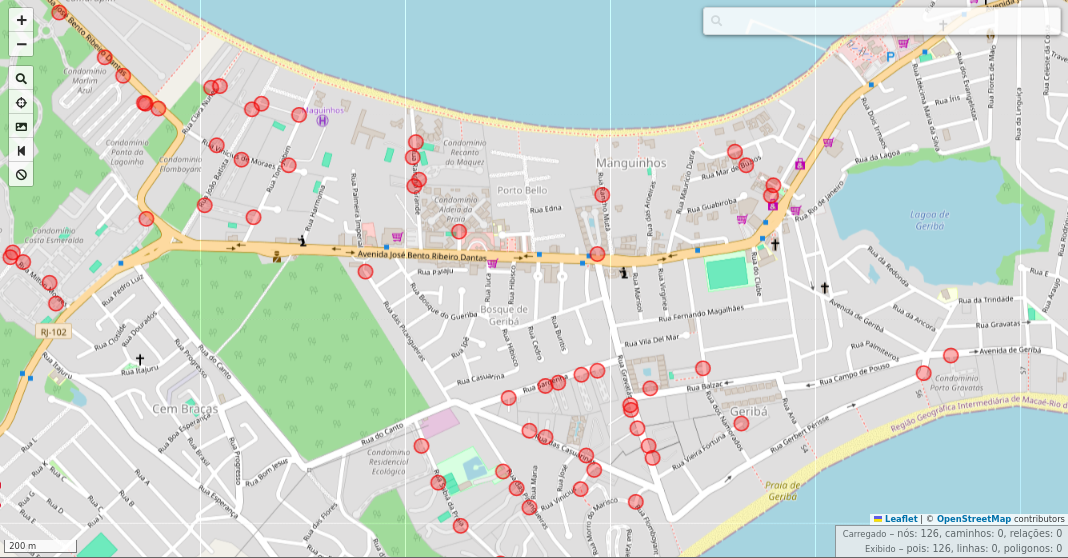
Manguinhos Bay, Armação dos Búzios, Rio de Janeiro, Brazil, viewed in the overpass turbo, filtering tag barrier=gate (red). Mapa data © OpenStreetMap contributors, Nov. 15,

Do you know how to map access points to the beach?


Check out the tagging scheme that we have developed for mapping access to beaches and other coastal recreational areas


Buzios_RJ_access

Manguinhos Bay, Armação dos Búzios, Rio de Janeiro, Brazil, viewed in the overpass turbo, filtering tag barrier=gate (red). Mapa data © OpenStreetMap contributors, Nov. 15, 2025.


Collaborative mapping of beach access with OpenStreetMap


I participated as a Keynote Speaker in the II Beach Access Network (BAN) Research Workshop, held between August 18 and 20, 2025, at Casa da Ciência, Rio de Janeiro (Brazil), and showed how to map beach access points with OpenStreetMap. Now you can read the text about the tagging scheme and some details of this mapping.

Download the text


The beach accesses are public in Brazil and in many other countries, but these areas are under pressure from the economic sector that seek to close access to a privileged people, especially those living in condominiums and resorts in coastal areas.

This text is the full version of the expanded summary that will be part of the book titled Public Access to Beaches: Management and Conflicts, to be released in 2026 by the IVIDES Publishing.

In the text, I present the actual Brazilian legal framework that guarantees public access to these areas, and two Federal Law projects that attempt to restrict access to certain areas and change the responsibility for authorizing access.

I also present a set of tags to be used for mapping these access points with OpenStreetMap and a discussion about the visualization of these tags in the standard OSM render and through online consultation with overpass turbo.

With the publication of this study, we hope to show how versatile OSM is, facilitating detailed mapping of these access points, as well as drawing attention to the value of beaches as public assets that should remain accessible to all.


IVIDES_publishing_logo

Monday, 08. December 2025

OpenStreetMap User's Diaries

New properties to be added

New development completed and occupied.

Consists of:
1 - 7 Norman Close, ST. ALBANS, AL1 2DW
1 - 5 King Offa Terrace, Wallingford Walk, ST. ALBANS, AL1 2EL
18A - 18B Abbots Avenue West, ST. ALBANS, AL1 2EJ

New development completed and occupied.

Consists of:
1 - 7 Norman Close, ST. ALBANS, AL1 2DW
1 - 5 King Offa Terrace, Wallingford Walk, ST. ALBANS, AL1 2EL
18A - 18B Abbots Avenue West, ST. ALBANS, AL1 2EJ


Access tag on house driveways?

While I mapped driveways years ago in my neighborhood, I didn’t include access tags. I saw that later someone added access=private tags, and I thought nothing of it assuming it was the correct tag. So now when I just mapped scores of them in the neighborhood additions, I just now had the thought to look on the wiki for the tag definition.

As said by the wiki, the definition of access=pri

While I mapped driveways years ago in my neighborhood, I didn’t include access tags. I saw that later someone added access=private tags, and I thought nothing of it assuming it was the correct tag. So now when I just mapped scores of them in the neighborhood additions, I just now had the thought to look on the wiki for the tag definition.

As said by the wiki, the definition of access=private:

Public access is not allowed. Access is granted with individual permission only. Examples: A driveway with a no trespassing or keep out sign; A company parking lot for employees only. “Individual permission” has been interpreted to also include delivery people making a delivery to a resident or drivers picking up a resident by request.

Most of that makes sense - but in the examples, why would it specify a driveway would need a “No Trespassing” or a “Keep Out” sign? Just wondering if I need to retag some driveways in line with common (or changing) practice, or at least having more confidence in tagging them correctly.


青森の出来ごと

地震があったね 震度6強 12月9日

地震があったね 震度6強 12月9日


Bala’ dan Musibah Turun karena Dosa dan Terangkat karena Taubat

Bala’ dan Musibah Turun karena Dosa dan Terangkat karena Taubat dr. Raehanul Bahraen, M.Sc, Sp.PK oleh dr. Raehanul Bahraen, M.Sc, Sp.PK 8 April 2018di Tazkiyatun Nufus musibah karena dosa Share on Facebook Share on Twitter Sebuah ungkapan bijak dalam bahasa Arab berbunyi,

ما نزل البلاء إلا بذنب وما رفع إلا بتوبة

“Setiap musibah yang turun disebabkan oleh dosa, dan tida

Alt text

Bala’ dan Musibah Turun karena Dosa dan Terangkat karena Taubat dr. Raehanul Bahraen, M.Sc, Sp.PK oleh dr. Raehanul Bahraen, M.Sc, Sp.PK 8 April 2018di Tazkiyatun Nufus musibah karena dosa Share on Facebook Share on Twitter Sebuah ungkapan bijak dalam bahasa Arab berbunyi,

ما نزل البلاء إلا بذنب وما رفع إلا بتوبة

“Setiap musibah yang turun disebabkan oleh dosa, dan tidak akan terangkat kecuali dengan taubat”

Hal ini perlu diperhatikan oleh setiap muslim, agar ia tidak terlalu mencari “kambing hitam” atas apa yang terjadi di dunia ini, akan tetapi hendaknya langsung introspeksi terhadap dirinya sendiri kemudian memperbaik dosa kesalahan tersebut serta mengiringi keburukan tersebut dengan segera melakukan kebaikan.

Nabi shallallahu ‘alaihi wa sallam bersabda,

ﻭَﺃَﺗْﺒِﻊِ ﺍﻟﺴَّﻴِّﺌَﺔَ ﺍﻟْﺤَﺴَﻨَﺔَ ﺗَﻤْﺤُﻬَﺎ

“Iringilah kejelakan dengan kebaikan, niscaya kebaikan kebaikan akan menghapuskannya.”[1]

Semua musibah dan kesusahan yang menimpa kita adalah karena dosa dan maksiat yang kita lakukan.

Allah Ta’ala berfirman,

وَمَا أَصَابَكُمْ مِنْ مُصِيبَةٍ فَبِمَا كَسَبَتْ أَيْدِيكُمْ وَيَعْفُو عَنْ كَثِيرٍ

“Dan apa saja musibah yang menimpa kamu maka adalah disebabkan oleh perbuatan tanganmu sendiri, dan Allah memaafkan sebagian besar (dari kesalahan-kesalahanmu)” (Asy Syura: 30).

Oleh karena itu kita dianjurkan agar memperbanyak bertaubat dan beristighfar agar dosa dihapus oleh Allah dan tidak Allah turunkan kepada kita dalam bentuk bala’ dan musibah.

Istighfar adalah sumber kemudahaan hidup dengan izin Allah, karenanya kita sangat dianjurkan memperbanyak istigfar di manapun dan kapan pun. Istigfar adalah amalan yang sangat mudah karena hanya menggerakkan lidah dan menghadirkan hati.

Al-Hasan Al-Bashri berkata,

أَكْثِرُوا مِنَ الِاسْتِغْفَارِ فِي بُيُوتِكُمْ، وَعَلَى مَوَائِدِكُمْ، وَفِي طُرُقِكُمْ، وَفِي أَسْوَاقِكُمْ، وَفِي مَجَالِسِكُمْ أَيْنَمَا كُنْتُمْ، فَإِنَّكُمْ مَا تَدْرُونَ مَتَى تَنْزِلُ الْمَغْفِرَةُ

“Perbanyaklah istighfar di rumah-rumah, meja-meja makan, jalan-jalan, pasar-pasar dan majelis-majelis kalian di manapun kalian berada, karena kalian tidak tahu kapan turunnya pengampunan Allah Subhanahu wa Ta’ala.”[2]

Luqman bepesan kepada anaknya,

يَا بُنِيَّ عَوِّدْ لِسَانَكَ: اللَّهُمَّ اغْفِرْ لِي، فَإِنَّ لِلَّهِ سَاعَاتٍ لَا يَرُدَّ فِيهَا سَائِلًا

“Wahai anakku biasakan lisanmu dengan ucapan: [اللهم اغفر لي] ‘Allhummafirli’ karena Allah memiliki waktu-waktu yang tidak ditolak permintaan hamba-Nya di waktu itu.”[3]

Baca Juga: Musibah, Antara Pahala dan Dosa

Dengan taubat kepada Allah maka bala’ dan musibah akan diangkat. Imam Al-Qurthubi menukil dari Ibnu Shubaih dalam tafsirnya, bahwasanya ia berkata,

شَكَا رَجُلٌ إِلَى الْحَسَنِ الْجُدُوبَةَ فَقَالَ لَهُ: اسْتَغْفِرِ اللَّهَ. وَشَكَا آخَرُ إِلَيْهِ الْفَقْرَ فَقَالَ لَهُ: اسْتَغْفِرِ اللَّهَ. وَقَالَ لَهُ آخَرُ. ادْعُ اللَّهَ أَنْ يَرْزُقَنِي وَلَدًا، فَقَالَ لَهُ: اسْتَغْفِرِ اللَّهَ. وَشَكَا إِلَيْهِ آخَرُ جَفَافَ بُسْتَانِهِ، فَقَالَ لَهُ: اسْتَغْفِرِ اللَّهَ. فَقُلْنَا لَهُ فِي ذَلِكَ؟ فَقَالَ: مَا قُلْتُ مِنْ عِنْدِي شَيْئًا، إِنَّ اللَّهَ تَعَالَى يَقُولُ فِي سُورَةِ” نُوحٍ”

“Ada seorang laki-laki mengadu kepadanya Hasan Al-Bashri tentang kegersangan bumi maka beliau berkata kepadanya, “beristighfarlah kepada Allah!”

yang lain mengadu kepadanya tentang kemiskinan maka beliau berkata kepadanya, “beristighfarlah kepada Allah!”

yang lain lagi berkata kepadanya, “Doakanlah (aku) kepada Allah, agar Ia memberiku anak!” maka beliau mengatakan kepadanya, “beristighfarlah kepada Allah!”

Dan yang lain lagi mengadu tentang kekeringan kebunnya maka beliau mengatakan pula kepadanya, “beristighfarlah kepada Allah!”

Dan kami pun menganjurkan demikian kepada orang tersebut.

Maka Hasan Al-Bashri menjawab: “Aku tidak mengatakan hal itu dari diriku sendiri, tetapi sungguh Allah telah berfirman dalam surat Nuh [ayat 10-12].”[4]

Dan dengan istigfar kita akan mendapatkan berbagai kemudahan, hati yang lapang dan rezeki

Allah Ta’ala berfirman,

وَأَنِ اسْتَغْفِرُواْ رَبَّكُمْ ثُمَّ تُوبُواْ إِلَيْهِ يُمَتِّعْكُم مَّتَاعاً حَسَناً إِلَى أَجَلٍ مُّسَمًّى

“dan hendaklah kamu meminta ampun [istigfar] kepada Tuhanmu dan bertaubat kepada-Nya. (Jika kamu mengerjakan yang demikian),niscaya Dia akan memberi kenikmatan yang baik (terus menerus) kepadamu sampai kepada waktu yang telah ditentukan.” (Hud: 3)

Syaikh Muhammad Amin As-Syinqithi berkata menafsirkan ayat ini,

وَالظَّاهِرُ أَنَّ الْمُرَادَ بِالْمَتَاعِ الْحَسَنِ: سَعَةُ الرِّزْقِ، وَرَغَدُ الْعَيْشِ، وَالْعَافِيَةُ فِي الدُّنْيَا، وَأَنَّ الْمُرَادَ بِالْأَجَلِ الْمُسَمَّى: الْمَوْتُ

“Pendapat terkuat tentang yang dimaksud dengan kenikmatan adalah rezeki yang melimpah, kehidupan yang lapang, dan keselamatan di dunia dan yang dimaksud dengan waktu yang ditentukan adalah kematian.”[5]

Hendaknya kita renungkan sabda Nabi shallallahu ‘alaihi wa sallam,

إِذَا أَرَادَ اللَّهُ بِعَبْدِهِ الْخَيْرَ عَجَّلَ لَهُ الْعُقُوبَةَ فِى الدُّنْيَا وَإِذَا أَرَادَ اللَّهُ بِعَبْدِهِ الشَّرَّ أَمْسَكَ عَنْهُ بِذَنْبِهِ حَتَّى يُوَفَّى بِهِ يَوْمَ الْقِيَامَةِ

“Jika Allah menginginkan kebaikan pada hamba, Dia akan segerakan hukumannya di dunia. Jika Allah menghendaki kejelekan padanya, Dia akan mengakhirkan balasan atas dosa yang ia perbuat hingga akan ditunaikan pada hari kiamat kelak.”[6]

Demikian semoga bermanfaat

Baca Juga: Sikap Seorang Muslim dalam Menghadapi Musibah

@ Di antara Langit dan bumi Allah, Pesawat Citilink, Perjalanan Yogyakarta – Medan

Penyusun: Raehanul Bahraen Artikel muslim.or.id

Catatan kaki:

[1] HR. Tirmidzi

[2] Jami’ Al-ulum wal hikam hal. 535, Darul Aqidah, Kairo, cet.1, 1422 H

[3] Kalamul Layaali wal Ayyaami libni Abid Dunya

[4]Jami’ Liahkamil Quran 18/302, Darul Kutub Al-Mishriyah, kairo, cet. Ke-2, 1348 H, Asy-Syamilah

[5] Adhwa’ul Bayan 2/170, Darul Fikr, Libanon, 1415 H, Asy-Syamilah

[6] HR. Tirmidzi no. 2396, hasan shahih kata Syaikh Al Albani

Sumber: https://muslim.or.id/38223-bala-dan-musibah-turun-karena-dosa-dan-terangkat-karena-taubat.html Copyright © 2025 muslim.or.id


Dosa Adalah Penyebab Hukuman Atau Siksa

DOSA ADALAH PENYEBAB HUKUMAN ATAU SIKSA

Oleh Syaikh Abdulmalik bin Ahmad bin al-Mubarak Ramadhani

Segala sesuatu itu berada dalam kekuasaan Allâh dan segala sesuatu yang ada dalam kekuasaan Allâh berjalan sesuai dengan perintah-Nya. Dan semua kesusahan yang menimpa munusia merupakan akibat dari perbuatan mereka sendiri. Allâh Azza wa Jalla itu maha adil lagi bijaksana.

Alt text

DOSA ADALAH PENYEBAB HUKUMAN ATAU SIKSA

Oleh Syaikh Abdulmalik bin Ahmad bin al-Mubarak Ramadhani

Segala sesuatu itu berada dalam kekuasaan Allâh dan segala sesuatu yang ada dalam kekuasaan Allâh berjalan sesuai dengan perintah-Nya. Dan semua kesusahan yang menimpa munusia merupakan akibat dari perbuatan mereka sendiri. Allâh Azza wa Jalla itu maha adil lagi bijaksana. Semua manusia hidup dibawah naungan rahmat karena sebab kebaikan yang telah mereka lakukan, atau dibawah adzab akibat dari perbuatan buruk yang telah mereka kerjakan. Ketika seorang hamba itu istiqâmah di atas syariat Allâh, maka kehidupan dunianya akan lurus dan mendatangkan banyak manfaat, bukan madharat, juga dia akan mendapatkan pahala yang berlipat ganda kelak di akhirat. Allâh akan memudahkan baginya segala bentuk kesulitan, dia akan dilayani oleh yang jauh maupun yang dekat, dan akan terdapat banyak kebaikan pada masyarkatnya, sebagaimana firman Allâh Azza wa Jalla :

وَلَوْ أَنَّ أَهْلَ الْقُرَىٰ آمَنُوا وَاتَّقَوْا لَفَتَحْنَا عَلَيْهِمْ بَرَكَاتٍ مِنَ السَّمَاءِ وَالْأَرْضِ وَلَٰكِنْ كَذَّبُوا فَأَخَذْنَاهُمْ بِمَا كَانُوا يَكْسِبُونَ

Jikalau sekiranya penduduk negeri-negeri beriman dan bertakwa, pastilah Kami akan melimpahkan kepada mereka berkah dari langit dan bumi, tetapi mereka mendustakan (ayat-ayat Kami) itu, maka Kami siksa mereka disebabkan perbuatannya.[Al-A’râf/7:96]

Allâh juga berfirman mengenai Ahli kitab:

وَلَوْ أَنَّهُمْ أَقَامُوا التَّوْرَاةَ وَالْإِنْجِيلَ وَمَا أُنْزِلَ إِلَيْهِمْ مِنْ رَبِّهِمْ لَأَكَلُوا مِنْ فَوْقِهِمْ وَمِنْ تَحْتِ أَرْجُلِهِمْ

Dan sekiranya mereka sungguh-sungguh menjalankan (hukum) Taurat dan Injil dan (al-Qur’an) yang diturunkan kepada mereka dari Rabbnya, niscaya mereka akan mendapat makanan dari atas dan dari bawah kaki mereka.[Al-Mâidah/5:66]

Dan tidak ada yang mengurangi (menghalangi) nikmat tersebut kecuali dosa yang dia lakukan. Allâh Azza wa Jalla berfirman:

فَكُلًّا أَخَذْنَا بِذَنْبِهِ

Maka masing-masing (mereka itu) Kami siksa disebabkan dosanya [Al-Ankabût/29:40]

Allâh juga berfirman:

وَمَا أَصَابَكُمْ مِنْ مُصِيبَةٍ فَبِمَا كَسَبَتْ أَيْدِيكُمْ وَيَعْفُو عَنْ كَثِيرٍ

Dan apa saja musibah yang menimpa kamu maka adalah disebabkan oleh perbuatan tanganmu sendiri, dan Allâh memaafkan sebagian besar (dari kesalahan-kesalahanmu).[As-Syûrâ/42:30]

Juga firman-Nya:

مَا أَصَابَكَ مِنْ حَسَنَةٍ فَمِنَ اللَّهِ ۖ وَمَا أَصَابَكَ مِنْ سَيِّئَةٍ فَمِنْ نَفْسِكَ

Apa saja nikmat yang kamu peroleh adalah dari Allâh, dan apa saja bencana yang menimpamu, maka dari (kesalahan) dirimu sendiri.[An-Nisâ’/4:79]

Rasulullah Shallallahu ‘alaihi wa sallam bersabda.

عَنْ عَبْدِ اللَّهِ بْنِ عُمَرَ، قَالَ أَقْبَلَ عَلَيْنَا رَسُولُ اللَّهِ ـ صلى الله عليه وسلم ـ فَقَالَ ‏ “‏ يَا مَعْشَرَ الْمُهَاجِرِينَ خَمْسٌ إِذَا ابْتُلِيتُمْ بِهِنَّ وَأَعُوذُ بِاللَّهِ أَنْ تُدْرِكُوهُنَّ لَمْ تَظْهَرِ الْفَاحِشَةُ فِي قَوْمٍ قَطُّ حَتَّى يُعْلِنُوا بِهَا إِلاَّ فَشَا فِيهِمُ الطَّاعُونُ وَالأَوْجَاعُ الَّتِي لَمْ تَكُنْ مَضَتْ فِي أَسْلاَفِهِمُ الَّذِينَ مَضَوْا ‏.‏ وَلَمْ يَنْقُصُوا الْمِكْيَالَ وَالْمِيزَانَ إِلاَّ أُخِذُوا بِالسِّنِينَ وَشِدَّةِ الْمَؤُنَةِ وَجَوْرِ السُّلْطَانِ عَلَيْهِمْ ‏.‏ وَلَمْ يَمْنَعُوا زَكَاةَ أَمْوَالِهِمْ إِلاَّ مُنِعُوا الْقَطْرَ مِنَ السَّمَاءِ وَلَوْلاَ الْبَهَائِمُ لَمْ يُمْطَرُوا وَلَمْ يَنْقُضُوا عَهْدَ اللَّهِ وَعَهْدَ رَسُولِهِ إِلاَّ سَلَّطَ اللَّهُ عَلَيْهِمْ عَدُوًّا مِنْ غَيْرِهِمْ فَأَخَذُوا بَعْضَ مَا فِي أَيْدِيهِمْ ‏.‏ وَمَا لَمْ تَحْكُمْ أَئِمَّتُهُمْ بِكِتَابِ اللَّهِ وَيَتَخَيَّرُوا مِمَّا أَنْزَلَ اللَّهُ إِلاَّ جَعَلَ اللَّهُ بَأْسَهُمْ بَيْنَهُمْ

Dari Abdillah Ibnu Umar Radhiyallahu anhuma, beliau Radhiyallahu anhuma berkata, “Rasûlullâh Shallallahu ‘alaihi wa sallam mendatangi kami seraya bersabda, “Wahai kaum muhajirin! Ada lima hal jika menimpa kalian, dan aku memohon perlindungan dari Allâh agar lima hal tersebut tidak kalian temukan;

Tidaklah perbuatan keji muncul pada suatu kaum kemudian mereka terang-terangan melakukannya kecuali akan tersebar pada mereka penyakit levra dan penyakit-penyakit lainnya yang tidak pernah ada pada orang-orang sebelum mereka. Tidaklah mereka mengurangi timbangan dan takaran niscaya mereka akan ditimpa musim kekeringan dan kezhaliman para pemimpin. Tidaklah mereka enggan untuk mengeluarkan zakat harta mereka kecuali Allâh Azza wa Jalla akan enggan untuk menurunkan hujan dari langit, kalau bukan karena hewan ternak, mereka tidak akan mendapatkan hujan. Tidaklah pula mereka melanggar janji Allâh dan Rasul-Nya kecuali Allâh akan menjadikan musuh mereka berkuasa atas mereka, musuh yang akan merampas sebagian harta benda yang mereka miliki Apabila para pemimpin mereka tidak berhukum dengan kitab Allâh, atau mereka memilah-milah apa yang telah Allâh turunkan, niscaya Allâh akan menghadirkan permusuhan diantara mereka.[1] Beginilah buruknya keadaan akibat dosa, tidaklah terjadi pada suatu kaum kecuali akan mendatangkan keburukan. Musuh akan muncul menghilangkan atau merampas kekayaan dan rezeki- rezeki mereka, merusak kehormantan mereka dan mengekang kebebasan mereka. Mereka akan ditimpa kemungkaran-kemungkaran yang sesuai dengan besarnya dosa yang telah mereka lakukan, kebaikan akan luput dari mereka sebanyak ketaatan yang luput dari mereka. Sungguh Allâh maha bijaksana dalam memberi hukuman, dan kita hanya meminta pertolongan darinya.

Baca Juga  10 Wasiat Agar Terhindar Dari Wabah JENIS HUKUMAN Hukuman ada dua jenis. Hukuman Jenis Pertama; Hukuman Qadariah Yaitu semua musibah fisik yang menimpa manusia berupa kefakiran, kekeringan, harga yang melambung tinggi, kezhaliman para pemimpin, berkuasanya para musuh, rusaknya harta dan anak-anak, hilangnya ketentraman hidup, gempa bumi, banjir, longsor dan lain-lain, sebagai akibat dari perbuatan dosa yang mereka lakukan, sebagaimana dielaskan oleh Allâh dalam banyak firman-Nya, diantaranya :

Kefakiran, kekeringan dan kekurangan buah-buahan karena dosa-dosa yang mereka lakukan. Allâh Azza wa Jalla berfirman:

وَلَقَدْ أَخَذْنَا آلَ فِرْعَوْنَ بِالسِّنِينَ وَنَقْصٍ مِنَ الثَّمَرَاتِ لَعَلَّهُمْ يَذَّكَّرُونَ

Dan sesungguhnya Kami telah menghukum (Fir’aun dan) kaumnya dengan (mendatangkan) musim kemarau yang panjang dan kekurangan buah-buahan, supaya mereka mengambil pelajaran. [Al-A’râf/7:130]

Adapun banjir, penenggelaman ke dasar bumi, dan yang lainnya, sesuai dengan firman Allâh Azza wa Jalla:

فَكُلًّا أَخَذْنَا بِذَنْبِهِ ۖ فَمِنْهُمْ مَنْ أَرْسَلْنَا عَلَيْهِ حَاصِبًا وَمِنْهُمْ مَنْ أَخَذَتْهُ الصَّيْحَةُ وَمِنْهُمْ مَنْ خَسَفْنَا بِهِ الْأَرْضَ وَمِنْهُمْ مَنْ أَغْرَقْنَا ۚ وَمَا كَانَ اللَّهُ لِيَظْلِمَهُمْ وَلَٰكِنْ كَانُوا أَنْفُسَهُمْ يَظْلِمُونَ

Maka masing-masing (mereka itu) Kami siksa disebabkan dosanya, maka di antara mereka ada yang Kami timpakan kepadanya hujan batu kerikil dan di antara mereka ada yang ditimpa suara keras yang mengguntur, dan di antara mereka ada yang Kami benamkan ke dalam bumi, dan di antara mereka ada yang Kami tenggelamkan, dan Allâh sekali-kali tidak hendak menganiaya mereka, akan tetapi merekalah yang menganiaya diri mereka sendiri. [Al-Ankabut/29:40]

Yang lebih berat dari itu semua adalah mereka dihukum dengan hilangnya keimanan dan hidayah, serta tidak bermanfaatnya ilmu yang dimiliki. Allâh Azza wa Jalla berfirman:

وَنُقَلِّبُ أَفْئِدَتَهُمْ وَأَبْصَارَهُمْ كَمَا لَمْ يُؤْمِنُوا بِهِ أَوَّلَ مَرَّةٍ وَنَذَرُهُمْ فِي طُغْيَانِهِمْ يَعْمَهُونَ

Dan (begitu pula) Kami memalingkan hati dan penglihatan mereka seperti mereka belum pernah beriman kepadanya (al-Qur’ân) pada permulaannya, dan Kami biarkan mereka bergelimang dalam kesesatannya yang sangat. [Al-An’âm/6:110]

Dan firman-Nya.

فَلَمَّا زَاغُوا أَزَاغَ اللَّهُ قُلُوبَهُمْ ۚ وَاللَّهُ لَا يَهْدِي الْقَوْمَ الْفَاسِقِينَ

Maka tatkala mereka berpaling (dari kebenaran), Allâh memalingkan hati mereka; dan Allâh tidak memberi petunjuk kepada kaum yang fasik. [As-Shaf/61:5]

Ibnu Qayyim rahimahullah mengatakan dalam Zâdul Ma’âd, “Barangsiapa memiliki pengetahuan tentang alam ini dan awal mulanya, maka dia akan mengetahui bahwa semua kerusakan yang terjadi di udara, tumbuh-tumbuhan, hewan dan keadaan keluarga, muncul setelah penciptaan yaitu ada dengan sebab yang mengakibatkan hal-hal itu terjadi. Perbuatan bani Adam dan penyelisihan mereka terhadap para rasul akan tetap mendatangkan bagi mereka kerusakan yang bersifat umum dan khusus, akan mendatangkan penyakit, kekeringan, hilangnya berkah bumi, tumbuhan dan buah-buahan. Perkara-perkara ini datang silih berganti. Jika pengetahuanmu belum meliputi ini semua maka cukuplah bagi kamu firman Allâh Azza wa Jalla :

ظَهَرَ الْفَسَادُ فِي الْبَرِّ وَالْبَحْرِ بِمَا كَسَبَتْ أَيْدِي النَّاسِ لِيُذِيقَهُمْ بَعْضَ الَّذِي عَمِلُوا لَعَلَّهُمْ يَرْجِعُونَ

Telah nampak kerusakan di darat dan di laut disebabkan karena perbuatan tangan manusi, supaya Allâh merasakan kepada mereka sebahagian dari (akibat) perbuatan mereka, agar mereka kembali (ke jalan yang benar). [Ar-Rûm/30:41]

Terapkan ayat ini dengan keadaan alam ini! Cocokkan ayat ini dengan realita yang terjadi sekarang ini! Kamu akan bisa melihat bagaimana terjadinya penyakit, hama pada buah-buahan, pertanian, hewan ternak, di setiap waktu. Kamu juga akan bisa melihat penyakit yang satu menimbulkan penyakit yang lainnya. Setiap kali manusia melakukan kezhaliman dan kejahatan, Allâh Azza wa Jalla mendatangkan bagi mereka penyakit dan kerusakan pada sumber gizi mereka, buah-buahan, udara, air, badan, bentuk, rupa, dan akhlak mereka, akibat dari perbuatan zhalim mereka. Dahulu biji gandum dan biji-bijian lainnya lebih besar dari yang ada sekarang. Imam Ahmad meriwayatkan dengan sanadnya, bahwa terdapat disebagian gudang Bani Umayyah karung yang berisi biji gandum sebesar biji kurma tertulis di atasnya: seperti inilah yang tumbuh di masa keadilan.

Kisah ini beliau rahimahullah sebutkan dalam Musnadnya setelah sebuah hadits yang beliau riwayatkan.

Baca Juga  Fatwa MUI : Ibadah Dalam Situasi Terjadi Wabah Covid-19 Kebanyakan penyakit dan kerusakan ini merupakan sisa dari adzab yang Allâh Azza wa Jalla timpakan kepada umat terdahulu. Sisa adzab ini diperuntukkan bagi mereka yang terdapat pada mereka perbuatan-perbuatan umat terdahulu sebagai bentuk hukuman, keadilan dan penunaian. Ini telah diisyaratkan oleh Nabi Shallallahu ‘alaihi wa sallam dengan sabda Beliau Shallallahu ‘alaihi wa sallam.

بَقِيَّةُ رِجْزٍ وَعَذَابٌ أُرْسِلَ عَلَى طَائِفَةٍ مِنْ بَنِي إِسْرَائِيلَ

Sesungguhnya dia merupkan sisa dari kotoran atau azab yang dikirimkan kepada Bani Israil

Allâh Azza wa Jalla juga menimpakan angin puting beliung kepada suatu kaum selama tujuh malam dan delapan hari, kemudian Allâh Azza wa Jalla menyisakan sedikit dari hari-hari tersebut.

Allâh Azza wa Jalla menjadikan perbuatan baik dan buruk saling berkaitan dengan akibatnya. Tidak mau melakukan kebaikan, tidak mengeluarkan zakat atau sedekah merupkan sebab hujan tidak turun dari langit yang menyebabkan kekeringan dan pacekelik. Allâh Azza wa Jalla juga menjadikan perbuatan zhalim terhadap orang-orang miskin, curang dalam timbangan dan takaran, serta sikap semena-mena terhadap orang lemah, sebagai sebab timbulnya kezhaliman para pemimpin. Para pemimpin yang tidak memiliki rasa iba dan kasih sayang, pada hakikatnya merupakan hasil dari perbuatan rakyat yang muncul dalam bentuk para pemimpin. Terkadang juga dalam bentuk penyakit yang merata, atau rasa sedih, dan kebingungan yang mendera jiwa, dan tidak lepas darinya. Terkadang juga dalam bentuk terhalangnya berkah dari langit dan bumi.

Orang yang berakal akan memandang setiap penjuru alam ini untuk menyaksikan dan melihat keadilan dan kebijaksanaan Allâh Azza wa Jalla, sehingga dengan itu dia akan tahu bahwa para Rasul dan pengikutnya berada dalam jalan keselamatan. Adapun selain mereka, maka mereka berada di atas jalan kebinasaan, menuju tempat kebinasaan, Allâh maha mampu melakukan segala urusan, tidak ada yang bisa membantah hukum yang telah ditetapkan-Nya, dan tidak ada yang mampu menolak perintah-Nya, dan hanya kepada Allâh meminta taufik.”. Selesai perkataan Ibnul Qayyim.

  1. Hukuman Jenis Kedua: Hukuman Syar’i Yaitu Allâh mengharamkan kepada mereka apa yang telah dihalalkan. Allâh Subhanahu wa Ta’ala berfirman:

وَعَلَى الَّذِينَ هَادُوا حَرَّمْنَا كُلَّ ذِي ظُفُرٍ ۖ وَمِنَ الْبَقَرِ وَالْغَنَمِ حَرَّمْنَا عَلَيْهِمْ شُحُومَهُمَا إِلَّا مَا حَمَلَتْ ظُهُورُهُمَا أَوِ الْحَوَايَا أَوْ مَا اخْتَلَطَ بِعَظْمٍ ۚ ذَٰلِكَ جَزَيْنَاهُمْ بِبَغْيِهِمْ ۖ وَإِنَّا لَصَادِقُونَ

Dan kepada orang-orang Yahudi, Kami haramkan segala binatang yang berkuku dan dari sapi dan domba, Kami haramkan atas mereka lemak dari kedua binatang itu, selain lemak yang melekat di punggung keduanya atau yang di perut besar dan usus atau yang bercampur dengan tulang. Demikianlah Kami hukum mereka disebabkan kedurhakaan mereka; dan sesungguhnya Kami adalah Maha Benar. [Al-An’am/6:146]

Allâh mengabarkan bahwa Dia mengharamkan kepada mereka beberapa hal dikarenakan kezhaliman dan sikap melampaui batasa mereka. Diharamkan kepada mereka setiap hewan berkuku seperti unta dan semisalnya, Allâh juga mengharamkan lemak sapi dan kambing kecuali yang menempel pada punggung, usus, dan tulang.

Contohnya juga kisah Bani Israil yang mempersulit diri mereka ketika diperintahkan untuk menyembelih sapi betina sebagaimana disebutkan dalam surat al-Baqarah. Allâh Azza wa Jalla memerintahkan mereka untuk menyembelih sapi manapun yang mudah mereka dapatkan, akan tetapi mereka membangkang perintah Allâh Azza wa Jalla dengan melontarkan banyak pertanyaan yang akhirnya mempersulit mereka. Ibnu Abbâs Radhiyallahu anhuma berkata, “Seandainya mereka mengambil sapi yang paling mudah bagi mereka, niscaya itu sudah cukup. Akan tetapi mereka mempersulit diri mereka sehingga Allâh Azza wa Jalla mempersulit mereka.” Ini diriwayatkan oleh Ibnu jarir dalam tafsirnya.

Maksudnya, Allâh Azza wa Jalla menimpakan kepada mereka belenggu dan beban dengan cara mempersulit sifat sapi yang diperintahkan untuk disembelih disebabkan karena dosa pembangkangan mereka terhadap perintah Allâh Azza wa Jalla.

[Disalin dari majalah As-Sunnah Edisi 06/Tahun XVIII/1436H/2014M. Diterbitkan Yayasan Lajnah Istiqomah Surakarta, Jl. Solo – Purwodadi Km.8 Selokaton Gondangrejo Solo 57183 Telp. 0271-858197 Fax 0271-858196.Kontak Pemasaran 085290093792, 08121533647, 081575792961, Redaksi 08122589079] __ Footnote [1] Dikeluarkan oleh Ibnu Mâjah dan dishahihkan oleh Imam al-Albani rahimahullah Referensi : https://almanhaj.or.id/70691-dosa-adalah-penyebab-hukuman-atau-siksa.html


TematikTauhid Jalan Menuju Surga – Tabligh Akbar (Ustadz Yazid Abdul Qadir Jawas)

♦ Tauhid Jalan Menuju Surga – Tabligh Akbar (Ustadz Yazid Abdul Qadir Jawas)By Radio Rodja | Senin, 23 April 2018 | rodja.id/1sy Tauhid Jalan Menuju Surga adalah Tabligh Akbar yang disampaikan oleh Ustadz Yazid Abdul Qadir Jawas. Tabligh akbar bersama Ustadz Yazid Abdul Qadir Jawas ini diselenggarakan di Masjid An-Nur, Jl. Diponegoro Sanglah, Denpasar pada Sabtu, 22 Jumadal Akhiroh 1439 H / 11 M

Alt text Tauhid Jalan Menuju Surga – Tabligh Akbar (Ustadz Yazid Abdul Qadir Jawas)By Radio Rodja | Senin, 23 April 2018 | http://rodja.id/1sy Tauhid Jalan Menuju Surga adalah Tabligh Akbar yang disampaikan oleh Ustadz Yazid Abdul Qadir Jawas. Tabligh akbar bersama Ustadz Yazid Abdul Qadir Jawas ini diselenggarakan di Masjid An-Nur, Jl. Diponegoro Sanglah, Denpasar pada Sabtu, 22 Jumadal Akhiroh 1439 H / 11 Maret 2018 M.

Ceramah Agama Tentang Tauhid Jalan Menuju Surga – Tabligh Akbar Kita wajib bersyukur kepada Allah dan syukur harus diwujudkan dengan melaksanakan perintah-perintah Allah dan menjauhkan larangan-laranganNya. Pangkal dari syukur adalah tauhid kepada Allah. Dijelaskan oleh Imam Ibnu Qayyim didalam kitab Ad-Daa wa Ad-Da Waa, beliau berkata, “Pangkal Syukur itu adalah tauhid”.

Jadi, ketika seseorang mengatakan dia bersyukur kepada Allah, ketika Allah memerintahkan untuk bersyukur kepada Allah, itu mantauhidkan Allah. Maka dijelaskan oleh sebagian mufassirin, ketika mentafsirkan ayat dalam surat Ibrahim, surat yang ke-14 ayat ke-7:

وَإِذْ تَأَذَّنَ رَبُّكُمْ لَئِن شَكَرْتُمْ لَأَزِيدَنَّكُمْ ۖ وَلَئِن كَفَرْتُمْ إِنَّ عَذَابِي لَشَدِيدٌ ﴿٧﴾

“Dan (ingatlah juga), tatkala Tuhanmu memaklumkan; “Sesungguhnya jika kamu bersyukur, pasti Kami akan menambah (nikmat) kepadamu, dan jika kamu mengingkari (nikmat-Ku), maka sesungguhnya azab-Ku sangat pedih”.” (QS. Ibrahim[14]: 7)

Dikatakan oleh sebagiaan mufassirin bahwa maksud “seandainnya kamu bersyukur,” adalah dengan mentauhidkan Allah dan melaksanakan perintahNya serta menjauhkan maksiat.

Manusia secara umum, mereka tidak bersyukur kepada Allah dan mereka dzolim. Allah menyebutkan juga dalam surat Ibrahim pada ayat yang ke-34:

وَآتَاكُم مِّن كُلِّ مَا سَأَلْتُمُوهُ ۚ وَإِن تَعُدُّوا نِعْمَتَ اللَّـهِ لَا تُحْصُوهَا ۗ إِنَّ الْإِنسَانَ لَظَلُومٌ كَفَّارٌ ﴿٣٤﴾

“Dan Dia telah memberikan kepadamu (keperluanmu) dan segala apa yang kamu mohonkan kepadanya. Dan jika kamu menghitung nikmat Allah, tidaklah dapat kamu menghinggakannya. Sesungguhnya manusia itu, sangat zalim dan sangat mengingkari (nikmat Allah).” (QS. Ibrahim[14]: 34)

Kebayakan manusia dzolim kepada dirinya, dzolim kepada Allah dengan berbuat syirik dan dzolim kepada orang lain. Demikianlah umumnya manusia. Allah juga menyebutkan dalam ayat yang lain.

…إِنَّ اللَّـهَ لَذُو فَضْلٍ عَلَى النَّاسِ وَلَـٰكِنَّ أَكْثَرَ النَّاسِ لَا يَشْكُرُونَ ﴿٢٤٣﴾

“…Sesungguhnya Allah mempunyai karunia terhadap manusia tetapi kebanyakan manusia tidak bersyukur.” (QS. Al-Baqoroh[2]: 243)

Maka dari itu kita bersyukur dengan mentauhidkan Allah, menjauhi syirik, melaksanakan ketaatan-ketaatan kepada Allah, menjaukan maksiat, selalu menuntut ilmu syar’i, kemudian kita melakukan amal-amal shalih.

Dengan belajar, kita tahu bagaimana kita mentauhidkan Allah sehingga hilang kedzaliman. Karena kedzaliman yang paling dzalim dimuka bumi adalah syirik. Sebagaimana wasiat Luqman kepada anaknya:

…يَا بُنَيَّ لَا تُشْرِكْ بِاللَّـهِ ۖ إِنَّ الشِّرْكَ لَظُلْمٌ عَظِيمٌ ﴿١٣﴾

“…“Hai anakku, janganlah kamu mempersekutukan Allah, sesungguhnya mempersekutukan (Allah) adalah benar-benar kezaliman yang besar”.” (QS. Luqman[31]: 13)

Maka perlu bagi kita belajar untuk mengetahui yang mana tauhid dan yang mana syirik. Dengan belajar kita akan tahu mana sunnah dan yang mana bid’ah. Dengan belajar kita akan tahu yang mana jalan ketaatan dan juga mana jalan maksiat. Dengan kita belajar kita akan tahu mana da’i yang mengajak kepada jalan kebenaran dan mana da’i yang mengajak manusia ke jurang neraka jahannam.

Simak Penjelasan Lengkap dan Download MP3 Ceramah Agama Islam Tentang Tauhid Jalan Menuju Surga – Tabligh Akbar Pemutar Audio

00:00 00:00

Gunakan Anak Panah Atas/Bawah untuk menaikkan atau menurunkan volume. Podcast: Play in new window | Download

Subscribe: RSS

[soundcloud url=”https://api.soundcloud.com/tracks/433709637″ params=”color=ff5500&auto_play=false&hide_related=true&show_comments=false&show_user=true&show_reposts=false” width=”100%” height=”166″ iframe=”true” /] Mari raih pahala dan kebaikan dengan membagikan tautan ceramah agama ini ke Jejaring Sosial yang Anda miliki seperti Facebook, Twitter, Google+ dan yang lainnya. Semoga Allah Ta’ala membalas kebaikan Anda.

Dapatkan informasi dari Radio Rodja 756 AM, melalui :

Telegram: t.me/rodjaofficial Facebook: facebook.com/radiorodja Twitter: twitter.com/radiorodja Instagram: instagram.com/radiorodja Website: www.radiorodja.com

Dapatkan informasi dari Rodja TV, melalui :

Facebook: facebook.com/rodjatvofficial Twitter: twitter.com/rodjatv Instagram: instagram.com/rodjatv Website: www.rodja.tv


مرحبا

قمت بتعديل جديد وقمت بإزالة بعض الأماكن التي بالفعل تم نقلها إلى مكان آخر ولا يوجد تغيير في الخريطه هل تأخذ وقت طويل في تنزيل بيانات الجديده؟ كل ما اتطلع اليه هو تقديم بيانات دقيقه فقط للمستخدمين

قمت بتعديل جديد وقمت بإزالة بعض الأماكن التي بالفعل تم نقلها إلى مكان آخر ولا يوجد تغيير في الخريطه هل تأخذ وقت طويل في تنزيل بيانات الجديده؟ كل ما اتطلع اليه هو تقديم بيانات دقيقه فقط للمستخدمين


OpenStreetMap Blog

Results of the SotM 2025 Travel Grant Programme

Following the call for applications launched in April, we are thrilled to announce the results of the State of the Map 2025 Travel Grant Programme. This initiative aims to support contributors who may face challenges in attending the global OpenStreetMap conference, which will be held in Manila, Philippines, from October 3rd to 5th, 2025. The […]
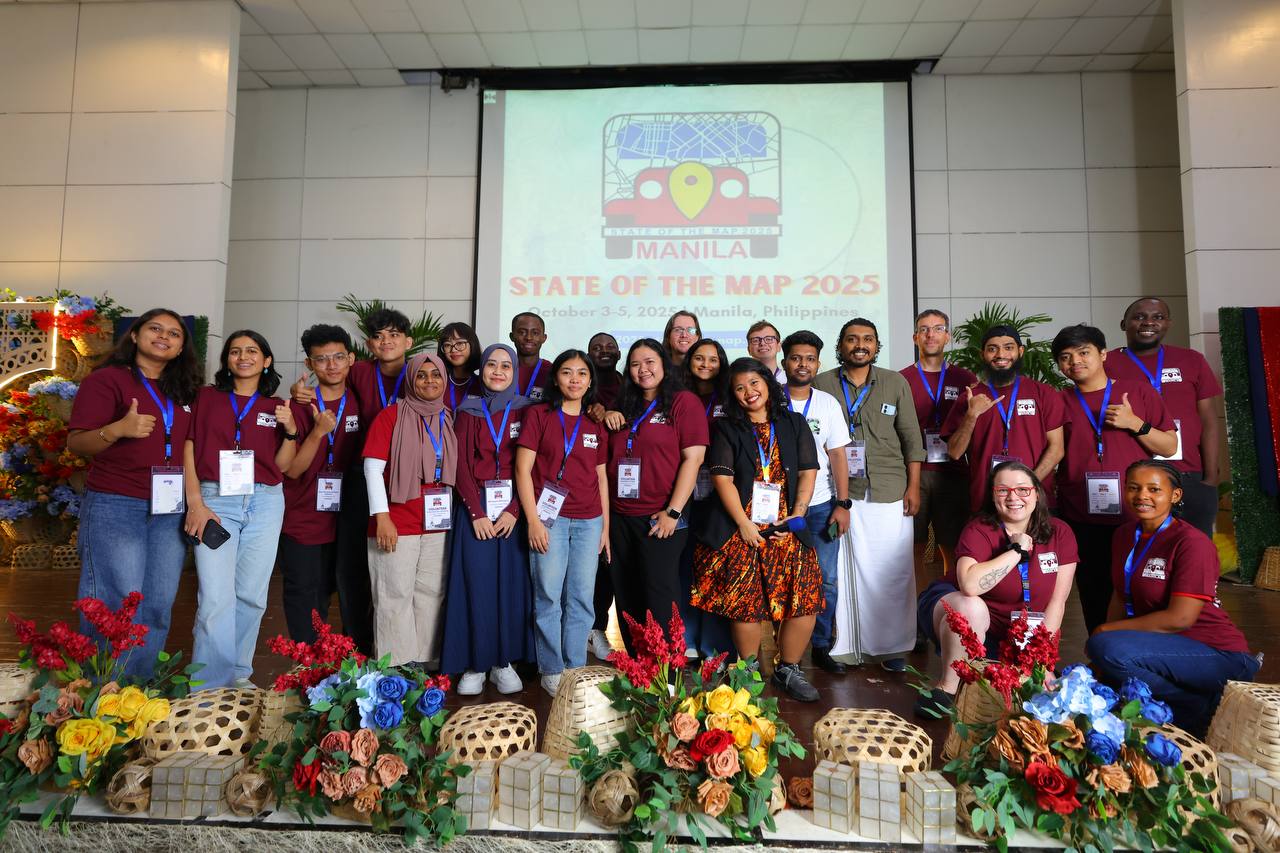
Photo of Travel Grant participants

Following the call for applications launched in April, we are thrilled to announce the results of the State of the Map 2025 Travel Grant Programme. This initiative aims to support contributors who may face challenges in attending the global OpenStreetMap conference, which will be held in Manila, Philippines, from October 3rd to 5th, 2025.

The Travel Grant Programme is a part of the OpenStreetMap Foundation’s ongoing commitment to making State of the Map more inclusive, diverse, and globally representative. By providing financial assistance, the programme enables community members from various regions and backgrounds to participate in the conference, both in person and online.

This year’s call for applications received an extraordinary response, with over 180 applications submitted by mappers and community members from more than 35 countries. The majority of applicants hailed from Asia and Africa. Notably, approximately 78% of all applicants were students or early-career mappers. However, only about one-third of the applicants identified as female. Furthermore, over 80% of the applicants had never attended a State of the Map event before. These figures underscore the ongoing success of the Travel Grant Programme in reaching new and emerging OpenStreetMap communities, particularly in the Global South.

Applicants represented a wide spectrum of mapping experience within the OpenStreetMap ecosystem. For example, using one of the multiple selection criteria (the number of changesets), we could see the wide spectrum of OSM mappers who applied to the call. Around 20% of applicants were new or had minimal mapping experience (fewer than 10 changesets), while approximately 30% were in the intermediate range (100–2000 changesets), showing consistent engagement and growing contributions. Notably, nearly one in four applicants were highly active mappers with more than 2,000 changesets, demonstrating deep, ongoing involvement in OSM projects. Overall, the applicant pool combined new contributors eager to join the global community with experienced mappers making strong local impacts, reflecting the programme’s success in attracting a balanced mix of experience levels.

After careful evaluation, 37 grantees were selected to receive support for travel and participation. However, only 25 of them were able to attend the event in Manila.
The selected applicants represent a diverse range of grant categories, from £215 to £1000. The allocation of funds was based on factors such as the distance traveled, regional cost levels, and individual circumstances.

Grant categoryNumber of recipientsOrigin countries
£2158Philippines (outside Metro Manila), Indonesia
£6757Nepal, Bangladesh, India
£7503Poland, Canada, Portugal
£10006Uganda, Tanzania, Ghana, Rwanda
Online support9Various countries

The selection criteria employed in the call successfully achieved the objective of increasing the diversity of participants at SotM. A total of 17 female and 16 male grantees attended, resulting in a nearly gender-balanced group. Notably, there was strong representation of women within the OpenStreetMap community. Furthermore, 90% of the grantees hailed from Africa and Asia, underscoring the Foundation’s unwavering commitment to equitable global participation.

The diversity of applicants and grantees reflects the remarkable progress made by the OpenStreetMap community in expanding access to global events. Thanks to the Travel Grant Programme, many first-time attendees will now have the opportunity to share their experiences, projects, and local insights with the global OSM community in Manila.

The OSM Foundation and the State of the Map organizing team warmly thanks all applicants, reviewers, and sponsors whose support made this year’s programme possible.
We look forward to welcoming everyone to State of the Map 2026 in Paris!


The State of the Map conference is the annual, international conference of OpenStreetMap, organised by the OpenStreetMap Foundation. The OpenStreetMap Foundation is a not-for-profit organisation, formed to support the OpenStreetMap Project. It is dedicated to encouraging the growth, development and distribution of free geospatial data for anyone to use and share. The OpenStreetMap Foundation owns and maintains the infrastructure of the OpenStreetMap project, is financially supported by membership fees and donations, and organises the annual, international State of the Map conference. Our volunteer Working Groups and small core staff work to support the OpenStreetMap project. Join the OpenStreetMap Foundation for just £15 a year or for free if you are an active OpenStreetMap contributor.

OpenStreetMap was founded in 2004 and is an international project to create a free map of the world. To do so, we, thousands of volunteers, collect data about roads, railways, rivers, forests, buildings and a lot more worldwide. Our map data can be downloaded for free by everyone and used for any purpose – including commercial usage. It is possible to produce your own maps which highlight certain features, to calculate routes etc. OpenStreetMap is increasingly used when one needs maps which can be very quickly, or easily, updated.

Do you want to translate this and other blogposts in your language? Please email communication@osmfoundation.org with subject: Helping with translations in [your language]

Get notified about new blog posts: Subscribe to the English RSS feed (other languages available as well)

Sunday, 07. December 2025

OpenStreetMap User's Diaries

Chill Sunday

Not much to report today. I stopped by Play Coffee with a friend and added some POI tags while we were in line. There’s always something to map if you have a little downtime!

I also discovered that the building Cali Tacos is in has no POIs to speak of, so I’ll focus on adding those next, along with ever more fire hydrants. (I found some possibly interesting information about Van Deventer

Not much to report today. I stopped by Play Coffee with a friend and added some POI tags while we were in line. There’s always something to map if you have a little downtime!

I also discovered that the building Cali Tacos is in has no POIs to speak of, so I’ll focus on adding those next, along with ever more fire hydrants. (I found some possibly interesting information about Van Deventer fire hydrants, but I’m not sure it’s enough to answer the question firehydrant.org posed about whether or not it was a company or just a licensed design.) In fact, the geometry on the map just shows one singular building, which is true, but there are individual units for each business. I think it makes sense to break them up, I just need to make sure I’m doing it correctly.


How to streamline downloading data files from a mobile device running an Android OS

Using a phone running Android OS as a data collector for an RTK-enabled GNSS receiver, I ran into a fairly small but annoying inconvenience with getting data files from it on a Windows machine.

On Windows, you can’t mount a phone’s file system as an actual removable drive (don’t confuse that with seeing its file system in the File Explorer), so automating it with built-in command-line fi

Using a phone running Android OS as a data collector for an RTK-enabled GNSS receiver, I ran into a fairly small but annoying inconvenience with getting data files from it on a Windows machine.

On Windows, you can’t mount a phone’s file system as an actual removable drive (don’t confuse that with seeing its file system in the File Explorer), so automating it with built-in command-line file tools isn’t an option. File paths to the data folders of Android apps are ridiculously long, so traversing them manually is another hassle.

However, it’s still possible to do that using the Android Debug Bridge tool, a part of the SDK Platform Tools.

After installing SDK Platform Tools, you should be able to use the adb command in PowerShell or classic Command Prompt batch files.

Knowing the full path to a folder where your data collector app (LocusGIS, SW Maps, etc.) stores files you need to download regularly, you can get a list of that folder’s contents by calling adb shell ls command with the full path to that folder as a parameter.

Downloading a file is as easy as calling adb pull with the full path to the file you want to download. This process can be made more or less interactive if you create a script that lists all the folder contents, then prompts you for a name, and then downloads the file by the name you entered. The target file name or path can also be specified as another parameter. It’s even easier if the data collector app uses the same filename every time, or if you save it under the same name.

For all that to work, you’d have to enable USB debugging on your mobile device and grant permission for the Windows machine to use it when you first attempt to utilize the adb. However, it would save you the hassle of switching on the File Transfer mode every time you want to access the phone’s file system.

This information might look trivial to someone familiar with Android development and setup, but there are plenty of people who have no idea of what adb is capable of.


Zastávky MHD a jízdní řády

Nevím, jak se tím dopravním podnikům ulehčí život, když označí stejným jménem několik různých zastávek.

Kam se hrabou pražské zastávky typu Národní divadlo na Ostravu:

V centru Ostravy je 7 zastávek Sad Boženy Němcové. Nestačí, že jsou od sebe vzdáleny až 300 metrů. Ještě je mezi nimi místní magistrála, při jejímž překonávání spolehlivě zůstanete stát na ostrůvku uprostřed řeky a

Nevím, jak se tím dopravním podnikům ulehčí život, když označí stejným jménem několik různých zastávek.

Kam se hrabou pražské zastávky typu Národní divadlo na Ostravu:

V centru Ostravy je 7 zastávek Sad Boženy Němcové. Nestačí, že jsou od sebe vzdáleny až 300 metrů. Ještě je mezi nimi místní magistrála, při jejímž překonávání spolehlivě zůstanete stát na ostrůvku uprostřed řeky aut uvězněni několika semafory, takže dostat se ze Sadu Boženy Němcové, nástupiště 4 do Sadu Boženy Němcové, nástupiště 6 zabere nějakých 10 minut.

Úplně slyším Petra Čtvrtníčka, jak říká “Mohli jsme nazvat Sad Boženy Němcové, nástupiště 4 raději Sokolská třída; Sad Boženy Němcové, nástupiště 5 raději Trocnovská nebo Sad Boženy Němcové, nástupiště 6 raději Fügnerova. Jenomže my jsme řekli Ne!”

Svinov Mosty sice není rozetnut semafory, ale je pro změnu 3D monstrum. S tím neumí počítat ani programy pro vyhledávání spojení, takže cestu mezi nástupišti, která jsou ve 2D pár kroků od sebe, je nutné překonat soustavou schodišť a eskalátorů. Aby to byla ještě větší zábava, na označnících zastávek je napsáno například Svinov Mosty H3, ale v Pubtranu¹ se o téže zastávce dočtete, že máte přestoupit na Svinov Mosty, nástupiště 5. Když máte čas, volné ruce a počasí se vydaří, může to být příjemná procházka. Ale když pobíháte s kufry v rukou (Svinov je mj. i významné nádraží), už to taková paráda není.

Tak bych mohla zmínit ještě místní Náměstí Republiky s utajeným nástupištěm 9¾… pardon, 14. To je zdánlivě obyčejná zastávka MHD. Je po povrchu vzdálená (podle OSRM) cca 600 metrů od nedalekého Ústředního autobusového nádraží s nástupišti 1-12 a nástupištěm 13 městského dopravního podniku. Ať žije integrace městské a příměstské dopravy KODIS - začnou se míchat i zastávky autobusáku a emhádéčka. Takže když v Pubtranu uvidíte, že máte nastoupit na nástupišti 14, vůbec vám nedojde, že nemáte začít obíhat autobusák, ale jít na “normální” zastávku. Raději neřeším, jestli se z ÚANu podle této logiky stalo Náměstí Republiky 1-13

Ale proč pláču na tomto hrobě?

V OSM jsou hezky doplněná tahle ostravská rozlišovací značení do položky Ref. Tedáá, u Svinova bohužel právě ta H3, která sice dopravní podnik akčně připsal na označníky, ale v Pubtranu se jaksi nepoužívají.

Jenomže jak si my, nebohé socky, máme zobrazít položku Ref? Jediné offline mapy postavené nad OSM, které (aspoň mně) fungují, jsou Organic Maps #worksForMe a ty mi rozhodně Ref nezobrazí.

Apeluji proto na vážené kolegy: pišme informace do mapy viditelně. Není se za co stydět. Na označnících zastávek jsou ta čísla v jejich názvech. Někdy jako č. 3, někdy jako nást. 6. Pokud jsou tyto rozlišovací symboly pro jiné mapy “pod úroveň”, pak je to naopak naše výhoda. A preferujme symboly, které jsou doopravdy užívané v Pubtranu. Pokud je jich užíváno více (možná, že jenom nevím, že existuje i používaný jízdní řád, ve kterém se píše o Svinov Mosty H3), pišme je prosím také. Raději více než méně.

Děkuji za pozornost.

¹ Pubtran - Jízdní řády v této věci patrně vychází z dat pro Ministerstvo dopravy.


LUA - An Interesting Problem When Iterating with `for ... pairs` and the Lua Function `next`

German version

Initial Situation

In the forum, a user reports that a road on Crete is not being displayed completely. It quickly becomes clear that the German style is being used for rendering.

Openstreetmap.de operates two tile servers. On both of them, the tiles are faulty. It would be quite a coincidence if this were a hardware issue or a specific data import problem. Therefo

German version

Initial Situation

In the forum, a user reports that a road on Crete is not being displayed completely. It quickly becomes clear that the German style is being used for rendering.

Openstreetmap.de operates two tile servers. On both of them, the tiles are faulty. It would be quite a coincidence if this were a hardware issue or a specific data import problem. Therefore, it is very likely that the cause lies within the German style itself.

The only difference between the two road segments is that the visible part contains one additional tag, namely maxspeed:

First Attempt

In the first attempt, I added a tag, namely the surface surface, to the missing segment and forced the German server to re-render the tiles. As a result, the previously missing part of the road appeared. This brought me one step closer, but it is not a solution yet.

Second Attempt

The German style is based on the standard openstreetmap-carto style, which is used on openstreetmap.org for OpenStreetMap maps. It adopts the basic rendering but selectively modifies certain elements to make them more readable for Germans.

I was curious whether the missing road segments were also absent in the original style. Therefore, I rendered them using that style. For this, I used render_single_tile.py and retrieved the necessary information by right-clicking on the corresponding tile at https://tile.openstreetmap.de.

First, I rendered with the German style, where – as expected – the road section was missing:

render_single_tile.py --zxy 17 74577 51762 --stylefile openstreetmap-carto-de/osm-de.xml --outputfile site/rendersinglefile/1.png

Then with the original style, where the rendered tile was also incomplete:

render_single_tile.py --zxy 17 74577 51762 --stylefile openstreetmap-carto/mapnik.xml --outputfile site/rendersinglefile/3.png

From my understanding, this made it clear that the error already occurs when importing the OSM data into the database.

Third Attempt with a Misconception

The data import is performed via osm2pgsql. Here too, the Lua script version in the German style, openstreetmap-carto-flex-l10n.lua, was adapted based on openstreetmap-carto-flex.lua from the standard style.

At the beginning, I quickly noticed that roads with additional tags were displayed. Both LUA files – the original version and the modified German version – have since been extended so that certain keys are filtered out via ignore_keys. I also observed that for all road segments that were not displayed, the tags column in the database was empty. Unfortunately, I focused too much on the tags column. The highway field should also have been filled for osm_id 1340291113 – more on that later.

SELECT osm_id, name, highway, ref, tags
FROM planet_osm_line
WHERE osm_id IN (1340291113, 1340291114);
   osm_id   |                  name                   | highway | ref  |       tags       
------------+-----------------------------------------+---------+------+------------------
 1340291113 | Περάματος - Γαζίου - Perámatos - Gazíou |         | ΕΟ90 | 
 1340291114 | Περάματος - Γαζίου - Perámatos - Gazίou | primary | ΕΟ90 | "maxspeed"=>"40"
(2 rows)

Since I read on switch2osm.org that the original version openstreetmap-carto-flex.lua is not yet actively used, I initially investigated in the wrong direction.

I modified the import script so that whenever no tags were present, "dummy"=>"true" is inserted into the tags column:

local function add_linear(table_name, attrs, geom)
    for sgeom in geom:geometries() do
        attrs.way = sgeom

        if next(attrs.tags) == nil then
            attrs.tags.dummy = "true"
        end

        insert_row(table_name, attrs)
    end
end

In the test database, the result now looks like this. That highway and ref were filled is coincidental, as I discovered later:

SELECT osm_id, name, highway, ref, tags
FROM planet_osm_line
WHERE osm_id IN (1340291113, 1340291114);
   osm_id   |                  name                   | highway | ref  |       tags       
------------+-----------------------------------------+---------+------+------------------
 1340291113 | Περάματος - Γαζίου - Perámatos - Gazíou | primary | ΕΟ90 | "dummy"=>"true"
 1340291114 | Περάματος - Γαζίου - Perámatos - Gazíou | primary | ΕΟ90 | "maxspeed"=>"40"
(2 rows)

After this import, render_single_tile.py renders all road segments correctly, both with the original and the German style.

However, my workaround was considered “bad” – rightfully so, since at that point I still did not understand why the problem occurred in the first place.

Fourth Attempt

At this point, I assumed that the mapnik database queries generating the PNG files for the tiles might have issues if the tags column was empty. I had already mentioned that I had previously overlooked the fact that the highway field was also empty.

To keep it short: I could not find a query that selects only road segments that have tags. However, the highway column seemed to be crucial – and this insight guided me back in the right direction.

Fifth Attempt

The function prepare_columns has been worrying me for some time:

for key, value in pairs(object.tags) do
    if tag_map[key] then
        if (key == 'name') and (L10NLANG ~= nil) then
            attrs[key] = gen_l10n_name(object, islinear, iscountry)
        else
            attrs[key] = value
        end
        found_tag = true
    elseif ignore_type and key == 'type' then -- luacheck: ignore 542
        -- do nothing
    elseif keep_tag(key) then
        attrs.tags[key] = value
        found_tag = true
    end
end

Here we iterate over object.tags while simultaneously modifying object.tags in the l10n daemon during the iteration. I hadn’t questioned this before, since only a single tag is temporarily added. In the actual for loop, the same elements remain present.

The Lua manual states: “You should not assign any value to a non-existent field in a table during its traversal.” But if this were truly problematic, far more roads would be rendered incorrectly.

I examined the Lua source code: lua-5.4.8/src/ltable.c contains the function findindex. The error "invalid key to 'next'" would be raised if an element could not be found while iterating over object.tags. However, in my case, no error is logged.

Sixth Attempt

Since I had no other idea, I finally created a copy of object.tags and used it as the index in the for loop:

local keys = {}
for k in pairs(object.tags) do
    keys[#keys+1] = k
end

According to the Lua Manual, this is actually the recommended approach. Now everything works, even with few tags. At this point, I could basically leave it like this: the error is gone, and the code follows the recommendations of the manual.

However, I would still like to understand why the error only occurs for OSM ways with few tags, while those with many tags run stably.

Seventh Attempt

I’m using my faulty Lua script again and creating two OSM export files for quick testing. One of them contains a problematic way:

sudo -u tile wget -O ways.osm "https://overpass-api.de/api/interpreter?data=[out:xml];way(id:1340291113);(._;>;);out body;"

<osm version="0.6" generator="Overpass API 0.7.62.8 e802775f">
<note>The data included in this document is from www.openstreetmap.org. The data is made available under ODbL.</note>
<meta osm_base="2025-12-06T16:53:40Z"/>

  <node id="313813429" lat="35.3476725" lon="24.8258749"/>
  ...
  <node id="8959531924" lat="35.3475664" lon="24.8266017"/>
  <way id="1340291113">
    <nd ref="313813429"/>
    ...
    <nd ref="8959531917"/>
    <tag k="highway" v="primary"/>
    <tag k="name" v="Περάματος - Γαζίου"/>
    <tag k="ref" v="ΕΟ90"/>
    <tag k="source:ref" v="Ministerial Decision Γ25871/1963 (ΦΕΚ Β 319/23.07.1963)"/>
  </way>

</osm>

And an adjacent segment with a way that is not problematic:

sudo -u tile wget -O ways.osm "https://overpass-api.de/api/interpreter?data=[out:xml];way(id:1340291114);(._;>;);out body;"

<note>The data included in this document is from www.openstreetmap.org. The data is made available under ODbL.</note>
<meta osm_base="2025-12-06T16:53:40Z"/>

  <node id="313813460" lat="35.3465775" lon="24.8360096"/>
  ...
  <node id="8959531917" lat="35.3465228" lon="24.8358648"/>
  <way id="1340291114">
    <nd ref="8959531917"/>
    ...
    <nd ref="4810699410"/>
    <tag k="highway" v="primary"/>
    <tag k="maxspeed" v="40"/>
    <tag k="name" v="Περάματος - Γαζίου"/>
    <tag k="ref" v="ΕΟ90"/>
    <tag k="source:maxspeed" v="sign"/>
    <tag k="source:ref" v="Ministerial Decision Γ25871/1963 (ΦΕΚ Β 319/23.07.1963)"/>
  </way>

</osm>

Now I add print() statements to the Lua script. At the beginning of the loop, I print the tag that is currently being processed. Additionally, I print all object.tags together before and after the call to gen_l10n_name, where object.tags is modified.

for key, value in pairs(object.tags) do
    print(string.format("key: %s, value: %s", tostring(key), tostring(value)))

    if tag_map[key] then
        if key == 'name' and L10NLANG ~= nil then

            print("  --> Processing 'name' key with L10NLANG")

            for akey, avalue in pairs(object.tags) do
                print(string.format("    [before] akey: %s, avalue: %s", tostring(akey), tostring(avalue)))
            end

            attrs[key] = gen_l10n_name(object, islinear, iscountry)

            for zkey, zvalue in pairs(object.tags) do
                print(string.format("    [after] zkey: %s, zvalue: %s", tostring(zkey), tostring(zvalue)))
            end
         
            else
              attrs[key] = value
            end
            found_tag = true
        elseif ignore_type and key == 'type' then -- luacheck: ignore 542
            -- do nothing
        elseif keep_tag(key) then
            attrs.tags[key] = value
            found_tag = true
        end
    end

    if not found_tag then
        return nil
    end

    return attrs
end

Using

osm2pgsql --create -d gis --slim --output flex -S /srv/tile/openstreetmap-carto-de/openstreetmap-carto-flex-l10n.lua way113.osm

and

osm2pgsql --create -d gis --slim --output flex -S /srv/tile/openstreetmap-carto-de/openstreetmap-carto-flex-l10n.lua way114.osm

I can now test quite quickly.

I noticed that for a way with six tags (as in osm_id 1340291114), the order of the tags remains consistent during the loop iteration.

key: ref, value: ΕΟ90
key: highway, value: primary
key: maxspeed, value: 40
key: source:ref, value: Ministerial Decision Γ25871/1963 (ΦΕΚ Β 319/23.07.1963)
key: name, value: Περάματος - Γαζίου
  --> Processing 'name' key with L10NLANG
    [before] akey: ref, avalue: ΕΟ90
    [before] akey: highway, avalue: primary
    [before] akey: maxspeed, avalue: 40
    [before] akey: source:ref, avalue: Ministerial Decision Γ25871/1963 (ΦΕΚ Β 319/23.07.1963)
    [before] akey: name, avalue: Περάματος - Γαζίου
    [before] akey: source:maxspeed, avalue: sign
    [after] zkey: ref, zvalue: ΕΟ90
    [after] zkey: highway, zvalue: primary
    [after] zkey: maxspeed, zvalue: 40
    [after] zkey: source:ref, zvalue: Ministerial Decision Γ25871/1963 (ΦΕΚ Β 319/23.07.1963)
    [after] zkey: name, zvalue: Περάματος - Γαζίου
    [after] zkey: source:maxspeed, zvalue: sign
key: source:maxspeed, value: sign

On a second run, the order can be different. This is also stated in the Lua Manual: “The order in which the indices are enumerated is not specified, even for numeric indices.”

However, during a single loop iteration, the order of object.tags always remains the same – as shown in my print() outputs for key, akey, and zkey.

key: source:ref, value: Ministerial Decision Γ25871/1963 (ΦΕΚ Β 319/23.07.1963)
key: name, value: Περάματος - Γαζίου
  --> Processing 'name' key with L10NLANG
    [before] akey: source:ref, avalue: Ministerial Decision Γ25871/1963 (ΦΕΚ Β 319/23.07.1963)
    [before] akey: name, avalue: Περάματος - Γαζίου
    [before] akey: maxspeed, avalue: 40
    [before] akey: source:maxspeed, avalue: sign
    [before] akey: ref, avalue: ΕΟ90
    [before] akey: highway, avalue: primary
    [after] zkey: ref, zvalue: ΕΟ90
    [after] zkey: source:ref, zvalue: Ministerial Decision Γ25871/1963 (ΦΕΚ Β 319/23.07.1963)
    [after] zkey: name, zvalue: Περάματος - Γαζίου
    [after] zkey: maxspeed, zvalue: 40
    [after] zkey: source:maxspeed, zvalue: sign
    [after] zkey: highway, zvalue: primary
key: maxspeed, value: 40
key: source:maxspeed, value: sign
key: highway, value: primary

It is quite different with four tags (as in osm_id 1340291113). Here, zkey often changes. When my highway was missing, the situation apparently was like in the following log: Everything started in the order ref, source:ref, name, and highway. Then, when object.tags was modified during the iteration of the name tag, the order changed to source:ref, highway, name, and ref. As a result, highway was not processed in this loop iteration, while ref was processed twice:

key: ref, value: ΕΟ90
key: source:ref, value: Ministerial Decision Γ25871/1963 (ΦΕΚ Β 319/23.07.1963)
key: name, value: Περάματος - Γαζίου
  --> Processing 'name' key with L10NLANG
    [before] akey: ref, avalue: ΕΟ90
    [before] akey: source:ref, avalue: Ministerial Decision Γ25871/1963 (ΦΕΚ Β 319/23.07.1963)
    [before] akey: name, avalue: Περάματος - Γαζίου
    [before] akey: highway, avalue: primary
    [after] zkey: source:ref, zvalue: Ministerial Decision Γ25871/1963 (ΦΕΚ Β 319/23.07.1963)
    [after] zkey: highway, zvalue: primary
    [after] zkey: name, zvalue: Περάματος - Γαζίου
    [after] zkey: ref, zvalue: ΕΟ90
key: ref, value: ΕΟ90

In the next iteration, highway was processed twice.

key: highway, value: primary
key: source:ref, value: Ministerial Decision Γ25871/1963 (ΦΕΚ Β 319/23.07.1963)
key: ref, value: ΕΟ90
key: name, value: Περάματος - Γαζίου
  --> Processing 'name' key with L10NLANG
    [before] akey: highway, avalue: primary
    [before] akey: source:ref, avalue: Ministerial Decision Γ25871/1963 (ΦΕΚ Β 319/23.07.1963)
    [before] akey: ref, avalue: ΕΟ90
    [before] akey: name, avalue: Περάματος - Γαζίου
    [after] zkey: name, zvalue: Περάματος - Γαζίου
    [after] zkey: ref, zvalue: ΕΟ90
    [after] zkey: source:ref, zvalue: Ministerial Decision Γ25871/1963 (ΦΕΚ Β 319/23.07.1963)
    [after] zkey: highway, zvalue: primary
key: ref, value: ΕΟ90
key: source:ref, value: Ministerial Decision Γ25871/1963 (ΦΕΚ Β 319/23.07.1963)
key: highway, value: primary

After that, highway was not processed again:

key: source:ref, value: Ministerial Decision Γ25871/1963 (ΦΕΚ Β 319/23.07.1963)
key: name, value: Περάματος - Γαζίου
  --> Processing 'name' key with L10NLANG
    [before] akey: source:ref, avalue: Ministerial Decision Γ25871/1963 (ΦΕΚ Β 319/23.07.1963)
    [before] akey: name, avalue: Περάματος - Γαζίου
    [before] akey: highway, avalue: primary
    [before] akey: ref, avalue: ΕΟ90
    [after] zkey: highway, zvalue: primary
    [after] zkey: source:ref, zvalue: Ministerial Decision Γ25871/1963 (ΦΕΚ Β 319/23.07.1963)
    [after] zkey: ref, zvalue: ΕΟ90
    [after] zkey: name, zvalue: Περάματος - Γαζίου

With four tags, in my tests it’s a bit of a gamble whether all tags are processed, whereas with six tags everything is stable.

How can this be explained?

Lua tables consist of an array part for positive integer keys and a hash part for all other keys. Our tags, as strings, fall into the hash part. According to my research, the relevant code for adding elements in lua-5.4.8/src/ltable.c looks like this:

if (f == NULL) {  /* cannot find a free place? */
  rehash(L, t, key);  /* grow table */
  luaH_set(L, t, key, value);
  return;
}

This means: if no free hash slot is found, a rehash() is triggered immediately, potentially redistributing the elements.

Why does this happen more often in some tables?

Lua always chooses the hash size as a power of two (2ⁿ):

lsize = luaO_ceillog2(size);
size = twoto(lsize);
Example: 4 elements
ceil(log2(4)) = 2
2^2 = 4
Elements Hash size Free slots
4 4 0

Inserting another element triggers a rehash() and may rearrange the elements.

Example: 6 elements
ceil(log2(6)) ≈ ceil(2.58) = 3
2^3 = 8
Elements Hash size Free slots
6 8 2

Inserting or deleting elements here does not trigger a rehash(). The order of elements remains stable.

Example: 8 elements
ceil(log2(8)) = 3
2^3 = 8
Elements Hash size Free slots
8 8 0

Inserting another element triggers a rehash() again and may rearrange the elements. However, since the table is now larger, the likelihood of a significant portion of elements being “lost” or imported incorrectly is lower.


Pascal Neis

What’s your car really doing? Getting real time data and insights

Some people are curious about how healthy their car really is, while others take their vehicles onto the racetrack where it is essential to avoid overheating or pushing components far beyond their comfort zone. You can, of course, buy small aftermarket performance data displays that many cars support, but some friends would rather save the […]

Some people are curious about how healthy their car really is, while others take their vehicles onto the racetrack where it is essential to avoid overheating or pushing components far beyond their comfort zone. You can, of course, buy small aftermarket performance data displays that many cars support, but some friends would rather save the money and ask me for help instead. And naturally it always begins with the classic line: “You are doing something with computers, right?”

Most performance data displays have one thing in common: they use the OBD port of your car. This On Board Diagnostics interface provides access to the vehicle’s internal diagnostic systems and is usually located under the dashboard. Modern cars are required to offer an OBD II port, and online you will find plenty of adapters and connectors. I chose the Vgate iCar Pro Bluetooth because, according to my research, it works well with most Raspberry Pi devices. For this project I used a Raspberry Pi Zero 2 W to run my software, showing the values on a Waveshare 2.23 inch OLED HAT. The display can be attached directly as a HAT or connected with cables. Choosing the hardware turned out to be the simplest part of the entire journey.

Choosing the software
On GitHub you will find many open source projects that can read and display standard parameters such as coolant temperature, oil temperature and other basics, unless you drive an electric car. In my case the real challenge was not reading the standardised OBD II parameters or diagnostic trouble codes like P0xxx, C1xxx or U0xxx. What I really needed was access to the manufacturer specific diagnostic commands, the custom PIDs, used in extended protocols such as those from Toyota and BMW.

The learning curve
Before starting this project I had absolutely no experience with onboard diagnostics or with communicating with one or several ECUs (Electronic Control Unit). Entering this field, analysing header requests and responses, debugging byte sequences and doing a bit of reverse engineering turned out to be very interesting but also time consuming. Once you understand the logic it is not that difficult, but getting to that point was quite a rough ride. A helpful starting point was the following GitHub project, which I used in the beginning. Later on, due to some limitations and challenges, I wrote my own scripts which gave me more flexibility, particularly when working with the custom PIDs of different car manufacturers.

The first working prototype
After enough trial and error I ended up with a prototype that can read and display live data from both a Toyota and a BMW. It provides a real time view of the vehicle’s health and helps the driver decide whether it is time for a break or whether it is safe to keep pushing on the track. The custom Toyota PIDs from this thread were extremely helpful and so were the BMW custom PIDs from here.

Where this might go next
The most exciting part for me has been working with the custom PIDs. According to unofficial documentation, some BMW ECUs can even provide values such as longitudinal slope and bank angle. My next idea is to combine these measurements with geographical coordinates in the form of latitude and longitude and record the data for further analysis. Furthermore it could be very interesting to switch to the CAN bus instead of reading through the relatively slow OBD interface. Let us see where this goes …


OpenStreetMap User's Diaries

Help with building mapping?

Hello, guys. I am trying to map a neighborhood of León, in Spain. I need a lot of help, as there are plenty of buildings not mapped or not mapped correctly, so any help would be much appreciated. This is the note where you can see the area that I am working on right now. note/5052568#map=15/42.59710/-5.56225&layers=N

Hello, guys. I am trying to map a neighborhood of León, in Spain. I need a lot of help, as there are plenty of buildings not mapped or not mapped correctly, so any help would be much appreciated. This is the note where you can see the area that I am working on right now. note/5052568#map=15/42.59710/-5.56225&layers=N


Radfahrt am 06.12.2025

Name:

2025 12 06 37,50 #SchwarzerBulle DE NW Etwas krank Rad gefahren

Auf Openstreetmap:

@WARUMICHRADFAHRE/traces/12126906

Auf WARUMICHRADFAHRE.BLOG

warumichradfahre.blog/2025/12/06/bulls-daily-grinder-2-comeback-so-lief-die-emotionale-erste-fahrt/


Fahrt am 05.12.2025

Fahrt:

2025 12 05 42,30 #SchwarzerBulle DE NW Schwarzer Bulle Testfahrt Nordrandweg und Terranova Speedway

@WARUMICHRADFAHRE/traces/12127241

Strecke

Fahrt:

2025 12 05 42,30 #SchwarzerBulle DE NW Schwarzer Bulle Testfahrt Nordrandweg und Terranova Speedway

@WARUMICHRADFAHRE/traces/12127241

Strecke


weeklyOSM

weeklyOSM 802

  27/11/2025-03/12/2025 [1] OpenTopoMap is asking for support | © OpenTopoMap | map data © by OpenStreetMap Contributors Mapping campaigns Mateusz Konieczny is proposing a mechanical edit to fix conflicting paved=* and surface=* tags. confusedbuffalo is proposing to extend the existing automated edit of phone numbers to include the United Kingdom, removing extra punctuation and…


27/11/2025-03/12/2025

lead picture

[1] OpenTopoMap is asking for support | © OpenTopoMap | map data © by OpenStreetMap Contributors

Mapping campaigns

  • Mateusz Konieczny is proposing a mechanical edit to fix conflicting paved=* and surface=* tags.
  • confusedbuffalo is proposing to extend the existing automated edit of phone numbers to include the United Kingdom, removing extra punctuation and adding the country code. Mappers are invited to discuss this in the OSM Community forum thread and to get in touch if they think such an edit would also be useful and accepted in their country.

Community

  • Aselnigu has completed all 30 daily themes in the recent #30DayMapChallenge.
  • Anne-Karoline Distel explained how to map mounting blocks (raised platforms used to help riders mount horses and carriages), arguing that they should be tagged as amenity=mounting_block.
  • Dzertanoj explained a workflow for contributing high-precision GNSS-RTK tracks obtained from non-WGS84 referenced stations to OpenStreetMap. RTK (Real Time Kinematic) is a centimetre-level positioning method that uses a fixed base station to correct errors in standard Global Navigation Satellite System signals. These base stations operate in coordinate reference systems (CRS) other than the WGS84 system used by OpenStreetMap. This workflow converts that CRS while preserving the additional metadata, ensuring the resulting track data remains precise and reliable.
  • Koreller explained the process they used in mapping Cho Island.
  • Martijn Van Exel outlined the intricate challenges involved in classifying points of interest within OpenStreetMap data.
  • Andy Townsend has been using taginfo to find things that may be missing from the high zoom levels on his map style.

Imports

  • Mateusz Konieczny is proposing a global import of website tags for IKEA, using data produced by the All the Places web scrapers.

OpenStreetMap Foundation

  • The OpenStreetMap Ops Team has a special offer for AI companies: for a modest donation to the OpenStreetMap project, the donor company will receive a direct download link to OSM data in a machine-friendly format.

OSM research

  • HeiGIT is introducing ohsomeDB, the successor to the OpenStreetMap History Database, which offers a faster, more flexible foundation for analysing OpenStreetMap data. The current ohsome API is planned to be shut down after the State of the Map 2026, and your old queries and scripts will stop working by August 2026 at the latest, giving you sufficient time to adapt your workflows.

Maps

  • OSM Pyrénées-Orientales (France) tooted about the uMap created by LySioS, which provides an overview of the names of roundabouts located in the Pyrénées-Orientales region, extracted from OpenStreetMap. The data can be obtained in CSV format.

OSM in action

  • Mapping Diversity is a project coordinated by OBC Transeuropa for the European Data Journalism Network. It analyses the street names in 32 major European cities and compares how many are named to honour men or women, and visualises them on a map. This is accomplished by utilising the Wikidata identifier found on streets within OpenStreetMap.

Open Data

  • Xiao Xiang Zhu et al have developed GlobalBuildingAtlas, a publicly accessible dataset providing global coverage of building footprints, heights, and LOD1 (low-detail) 3D building models. The dataset is derived from PlanetScope satellite data, using regularisation networks trained on manually filtered OpenStreetMap annotations.

Software

  • [1] After 14 years of service, the OpenTopoMap developers have decided to discontinue the project shortly. There are intentions to create vector tiles, but there is no timeline. If you would like to support the project, the team invites you to get in touch.
  • Julcnx has updated their browser extension that enables Strava Heatmap data to be viewed directly within iD.

Programming

  • Martijn van Exel outlined the extract-transform-load workflow for OpenStreetMap data, demonstrating the use of osm2pgsql and osmium to process and manage the dataset.
  • GanderPL has experimented with an AI chatbot to speed up object tagging and better match tags to their purposes. His key tool is an MCP server, providing OpenStreetMap tagging schema for AI assistants. It enables tag validation, value querying, preset searching, and improvement suggestions. Initially the AI produced hallucinations and mismatched tags, but after converting the id-tagging-schema into a dedicated MCP tool, errors dropped significantly, though GanderPL is continuing to refine the process.

Did you know that …

  • … there is a Mastodon bot that toots the recent changes made using MapComplete? It includes beautiful photos about a variety of themes.
  • … SPOT is an AI-assisted geolocation service developed by Deutsche Welle Innovation? It works with natural language prompts and OSM data, requires no coding skills, and builds on the precision of overpass turbo.

Other “geo” things

  • Daniel DiDonato, 18, used free mapping software at home to redraw Alabama’s voting districts, and a federal judge later adopted his proposal to correct voting-rights violations, making it the map now in effect under state law.
  • rtnF explained how to access recent Sentinel satellite imagery to examine the effects of Cyclone Senyar, which caused catastrophic flooding and landslides across Indonesia in late November 2025. At least 867 deaths, more than 2,600 injuries, and 521 missing persons were reported in the provinces of North Sumatra, West Sumatra, and Aceh.
  • Jonathan Kemper, of Photographix Magazine, reported that the Copernicus Sentinel-1D satellite successfully delivered its first high-resolution radar images just 50 hours after launch. The satellite’s radar system is capable of mapping the Earth’s surface under any weather or lighting conditions. Sentinel-1D enters service as the replacement for Sentinel-1A, which has operated in orbit for nearly eleven years.
  • James Killick, of Map Happenings, highlighted Bee Maps, a company that has developed a dash-mounted AI camera called the ‘Bee’ for collecting map data. The unit combines a primary camera, stereo depth sensors, high-precision GNSS and integrated LTE for real-time data uploads. The company offers access to the device through subscriptions beginning at US$19 per month, while drivers can earn cryptocurrency by collecting mapping data on the road.

Upcoming Events

Country Where Venue What When
UN Mappers #ValidationFriday Mappy Hour 2025-12-05
flag Olomouc SotM CZ+SK 2025 2025-12-05
flag 大阪市 大阪大学中之島センター State of the Map Japan 2025 2025-12-06
flag Paris Carrefour Numérique² de la Cité des Sciences PSL XXL 2025-12-06 – 2025-12-07
flag Biella Sala Riunioni 2, CTV Centro Territoriale per il Vo Incontro dei mapper di Biellese, Vercellese e Canavese 2025-12-06
flag Braunschweig Stratum0 Braunschweiger Mappertreffen im Stratum0 Hackerspace 2025-12-06
flag Kiel Toppoint e.V. Kieler Radinfrastruktur mappen 2025-12-07
flag नई दिल्ली Jitsi Meet (online) OSM India – Monthly Online Mapathon 2025-12-07
Missing Maps : Mapathon en ligne – CartONG [fr] 2025-12-08
flag Grenoble La Turbine Atelier de décembre 2025 du groupe local de Grenoble 2025-12-08
flag 臺北市 MozSpace Taipei OpenStreetMap x Wikidata Taipei #83 2025-12-08
flag Salt Lake City Woodbine Food Hall OSM Utah Monthly Map Night 2025-12-09
flag Hamburg Voraussichtlich: “Variable”, Karolinenstraße 23 Hamburger Mappertreffen 2025-12-09
iD Community Chat 2025-12-10
flag Amsterdam TomTom Amsterdam Missing Maps/Maptime Amsterdam In-Person Mapathon 2025-12-10
flag Žilina GLOBESY s.r.o. Missing Maps mapathon Žilina #20 2025-12-11
flag München WikiMUC Münchner OSM-Treffen 2025-12-11
flag Online OpenStreetMap Midwest Meetup 2025-12-11
flag Zürich Bitwäscherei Zürich 182. OSM-Stammtisch Zürich 2025-12-12
flag Zaragoza Etopia GeoCamp – State of the Map España 2025 2025-12-13
flag MAP Mercator museum OpenStreetMap Belgium at the MAP-Mercator museum 2025-12-13
flag Jalpaiguri Thana More 10th OpenStreetMap West Bengal Mapping Party 2025-12-13
flag København Cafe Bevar’s OSMmapperCPH 2025-12-14
Missing Maps London: (Online) Mid-Month Mapathon [eng] 2025-12-16
flag Lyon Tubà Réunion du groupe local de Lyon 2025-12-16
flag Bonn Dotty’s 195. OSM-Stammtisch Bonn 2025-12-16
flag City of Westminster Monkey Puzzle pub London xmas pub meet-up 2025-12-16
flag Online Lüneburger Mappertreffen 2025-12-16
flag Düsseldorf Online bei https://meet.jit.si/OSM-DUS-2025 Düsseldorfer OpenStreetMap-Treffen (online) 2025-12-17
flag Karlsruhe Chiang Mai Stammtisch Karlsruhe 2025-12-17
flag Stainach-Pürgg Online 19. Österreichischer OSM-Stammtisch (online) 2025-12-18
UN Mappers Mappy Hour 2025-12-19
flag Potsdam Luisenplatz, Potsdamer Weihnachtsmarkt Potsdamer Mappertreffen 2025-12-19
flag MAP Mercator museum OpenStreetMap Belgium at the MAP-Mercator museum 2025-12-20
Missing Maps : Mapathon en ligne – CartONG [fr] 2025-12-22

Note:
If you like to see your event here, please put it into the OSM calendar. Only data which is there, will appear in weeklyOSM.

This weeklyOSM was produced by MarcoR, MatthiasMatthias, PierZen, Raquel Dezidério Souto, Andrew Davidson, barefootstache, derFred, jcr83.
We welcome link suggestions for the next issue via this form and look forward to your contributions.


OpenStreetMap User's Diaries

Nem túl aktív, de támogató

Sziasztok!

Az élet sodor, gyakran mint egy hurrikán. Ugyan kevés olyan időm akad, amikor OSM-el tudok picit foglalkozni, gyakran fut át a fejemen, hogy ezt-azt megnézek a térképen a környezetemből és majd javítom, szerkesztem, ha eltér. Nyilván ettől sokkal kevesebbszer érek oda, de azért párszor már összejött.

Továbbra is érdekel és fogok is szerkeszteni.

Néha még a JOSM

Sziasztok!

Az élet sodor, gyakran mint egy hurrikán. Ugyan kevés olyan időm akad, amikor OSM-el tudok picit foglalkozni, gyakran fut át a fejemen, hogy ezt-azt megnézek a térképen a környezetemből és majd javítom, szerkesztem, ha eltér. Nyilván ettől sokkal kevesebbszer érek oda, de azért párszor már összejött.

Továbbra is érdekel és fogok is szerkeszteni.

Néha még a JOSM-ot is frissítgetem az aktuális verzióra, akkor is, ha közben mégis az ID-n egyszerűbb és gyorsabb valamit igazgatni. A kis dolgoknál ez így is marad, de ha nagyobb varázslat szükséges, a JOSM is jó, látom, ha nem is sűrűn, de még mostanában is frissítették.

Az OSM továbbra is kedvenc koncepció a szememben és örülök, hogy jó ideje stabil és fejlődik.

Üdv, V.